Preparedness guide

Emergency Kit Basics

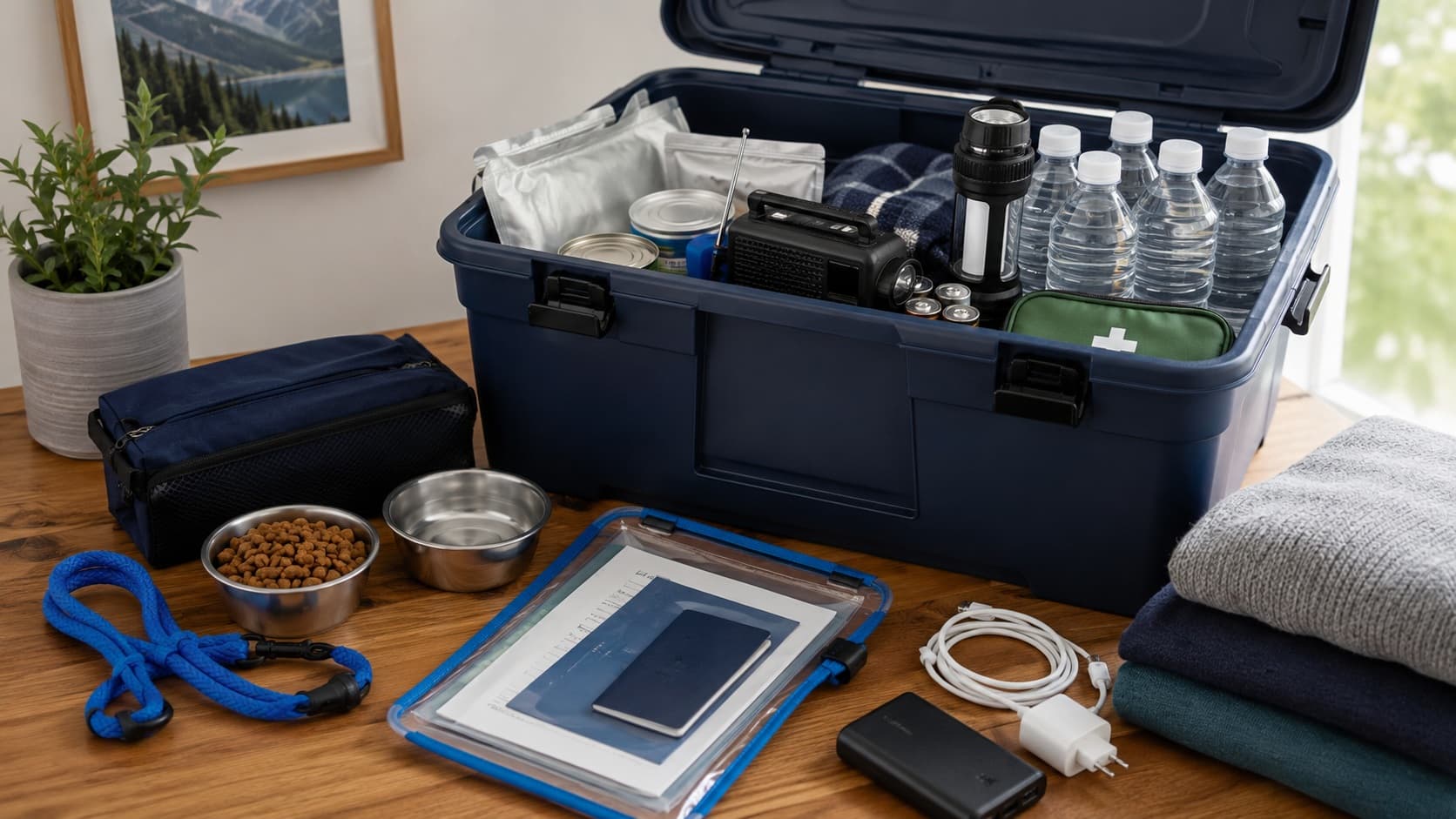
An emergency kit keeps practical items together so your household can handle short disruptions with less confusion. Build it gradually, adjust it for your people and pets, and review it regularly so it stays useful.

Start with these 3 steps

  1. Start with water and light.
  2. Add documents and contacts.
  3. Rotate supplies regularly.

Overview

What this means

An emergency kit is a collection of everyday supplies kept in one or more easy-to-reach places. It may help during power outages, storms, evacuation notices, sheltering guidance, travel disruption, or temporary service interruptions. A good kit is not one-size-fits-all. It should reflect your household’s food needs, communication options, medications, pets, accessibility needs, documents, local guidance, and the amount of space you realistically have.

Who may be affected

  • Renters with limited storage
  • Homeowners with shared household supplies
  • People who rely on powered devices
  • Households with pets
  • Families with children
  • Older adults living alone
  • People with medication routines
  • Households without easy transportation

Common misunderstandings

  • A kit must be expensive
  • One bag works for every household
  • Supplies can be packed once and forgotten
  • Documents are less important than gear
  • Pets do not need separate planning
  • A checklist guarantees readiness

Before

Prepare before

Build supplies gradually

A useful kit can be built one practical step at a time. Start with items that support the most common disruptions: safe lighting, water, simple food, phone charging, hygiene, documents, and basic comfort. You do not need to buy everything at once. Use what your household already owns, then fill gaps as your budget and storage allow.

  • Choose one storage spot that is easy to reach.
  • Add flashlights, batteries, and phone charging options.
  • Include simple food and water basics.
  • Use a written checklist to track gaps.

Plan water and food basics

Keep water and easy food in amounts that make sense for your household, storage space, and local guidance. Choose items your household can actually use, including baby food, pet food, or special diet items when needed. Avoid relying on cooking, refrigeration, or a single appliance. Rotate items before they expire.

  • Store water where containers will not be damaged.
  • Choose simple foods that need little preparation.
  • Include a manual opener if cans are part of the plan.
  • Check dates during a regular household routine.

Include documents and communication tools

Important information can be difficult to find during an outage, evacuation, or service disruption. Keep copies of key documents, emergency contacts, medication lists, pet records, and local information sources together. A paper copy matters because phones can lose power or service. Protect personal information in a way that fits your household.

  • Make a paper contact list.
  • Store copies of identification and household records.
  • Write down local alert and utility sources.
  • Keep documents in a protected folder.

Adapt for health, pets, and access needs

Every kit should reflect the people and animals who may use it. Include reminders for medications, glasses, mobility aids, communication needs, chargers, pet carriers, leashes, and comfort items. For medication storage, medical devices, disability-related planning, or personal health questions, ask medical professionals, device providers, utility providers, or local emergency management before an emergency.

  • List medications and device needs on paper.
  • Pack pet food, records, and handling supplies.
  • Include comfort items for children or anxious pets.
  • Ask qualified sources about personal medical planning.

During

During the event

Use the kit early

When an alert, outage, evacuation notice, or sheltering instruction makes the kit relevant, use it before the household feels rushed. Put flashlights where people can find them, charge phones if power remains, and gather documents, medication information, and pet supplies. If officials give instructions, follow local official instructions first.

  • Move lighting to common areas.
  • Place documents and keys where they are easy to grab.
  • Charge phones and backup batteries.
  • Keep pet supplies near carriers or leashes.

Keep items organized while using them

A kit works best when everyone knows what has been used and what remains. Keep opened food, batteries, charging cords, medications, and documents from scattering across the home if you can. Simple organization lowers stress and makes it easier to leave, shelter, or update others when conditions change.

  • Return unused items to the same container.
  • Set aside empty packages for restocking later.
  • Keep the paper contact list visible.
  • Assign one person to track shared supplies if possible.

Match supplies to the situation

Not every disruption requires every item. During a short outage, lighting and charging may matter most. During an evacuation, documents, medications, pet supplies, and contact lists may matter more. During heat, cold, smoke, or flooding concerns, official guidance should shape what you do. A kit supports decisions; it does not replace alerts or instructions.

  • Use only the supplies that fit the situation.
  • Bring documents if evacuation is possible.
  • Use official guidance for heat, smoke, food, or water concerns.
  • Call emergency services for urgent danger.

Share supplies thoughtfully

A disruption may affect neighbors, relatives, or nearby households differently. If it is safe and practical, share information, a phone charge, a flashlight, or a contact number without putting your household at risk. Do not enter unsafe areas or take on responsibilities that require trained help. Use local assistance resources when needs are beyond your kit.

  • Check on nearby people when it is safe.
  • Share official information sources.
  • Avoid unsafe buildings, roads, or flooded areas.
  • Contact local assistance resources for larger needs.

After

After the event

Restock what was used

After the disruption passes, restock the kit before everyday routines push it aside. Replace used batteries, food, water, hygiene items, pet supplies, paper forms, and comfort items. Recharge backup batteries. If something was missing, add it to a short list instead of trying to solve everything at once.

  • Replace used or expired items.
  • Recharge power banks and devices.
  • Add missing items to a simple list.
  • Move frequently used items back into the kit.

Rotate dates and storage

Emergency supplies stay useful when they are part of a regular rotation. Check expiration dates, battery condition, water containers, pet food, and seasonal items. Store the kit where it can be reached without digging through heavy boxes or locked spaces. Renters can use smaller containers in more than one location.

  • Review the kit on a calendar reminder.
  • Rotate food, water, and batteries.
  • Check storage for heat, dampness, or damage.
  • Use smaller kits if space is limited.

Update personal information

Contacts, medications, school details, building contacts, pet records, and utility information can change quietly over time. After using the kit, update anything that was outdated or hard to find. For medical devices, disability-related needs, or medication questions, use guidance from medical professionals, device providers, utility providers, or local emergency management.

  • Update emergency contacts and addresses.
  • Refresh medication and device lists.
  • Replace old pet or school records.
  • Save current utility and alert information.

Record lessons learned

A kit improves when you notice what actually happened. Write down what was easy to find, what was missing, what ran out, and what caused confusion. Keep the review calm and practical. One practical step might be moving flashlights closer to bedrooms or adding a second paper contact list near the door.

  • Write down two things that worked.
  • Write down two things to improve.
  • Ask household members what they needed.
  • Make one change within the next week.

Pair this guide with a practical emergency kit, a written family communication plan, and the emergency kit basics checklist. If the event could affect property or records, review insurance basics and important documents before conditions become stressful.

Scenarios

Practice steady decisions

A storm watch is announced

A local alert says severe weather is possible later, and you are not sure whether the kit is ready.

Steady action: Prepare calmly by checking lights, phone charging, documents, water, food basics, and pet supplies before conditions become urgent.

Official reminder: Monitor official alerts and follow local official instructions if warnings or evacuation notices are issued.

Power goes out after dark

The household needs lighting, phone battery, and a way to receive updates.

Steady action: Use flashlights, conserve phone power, keep the contact list visible, and check utility updates when service is available.

Official reminder: Use official utility channels for outage information and call emergency services for urgent danger.

An evacuation notice is possible

Officials have not ordered evacuation, but your area is being watched closely.

Steady action: Place documents, medication information, chargers, pet supplies, keys, and the kit near the exit so leaving is less rushed.

Official reminder: Follow local official instructions about evacuation timing, routes, shelters, and reentry.

A supply is expired

While checking the kit, you find expired food, old batteries, or outdated contact information.

Steady action: Replace what you can now, write down the rest, and set a rotation reminder so the kit stays useful.

Official reminder: Use official public guidance for food, water, medication, and safety questions when uncertain.

Checklist preview

Emergency Kit Basics checklist

  • Start with water and light.
  • Add documents and contacts.
  • Rotate supplies regularly.
View checklist hub

Morgan Hale

Need a practical next step?

Ask Morgan about disasters, preparedness, checklists, supplies, or practical next steps.