State preparedness
State Disaster Preparedness Guides
State-level preparedness starting points with common hazards, official sources, and guide links.
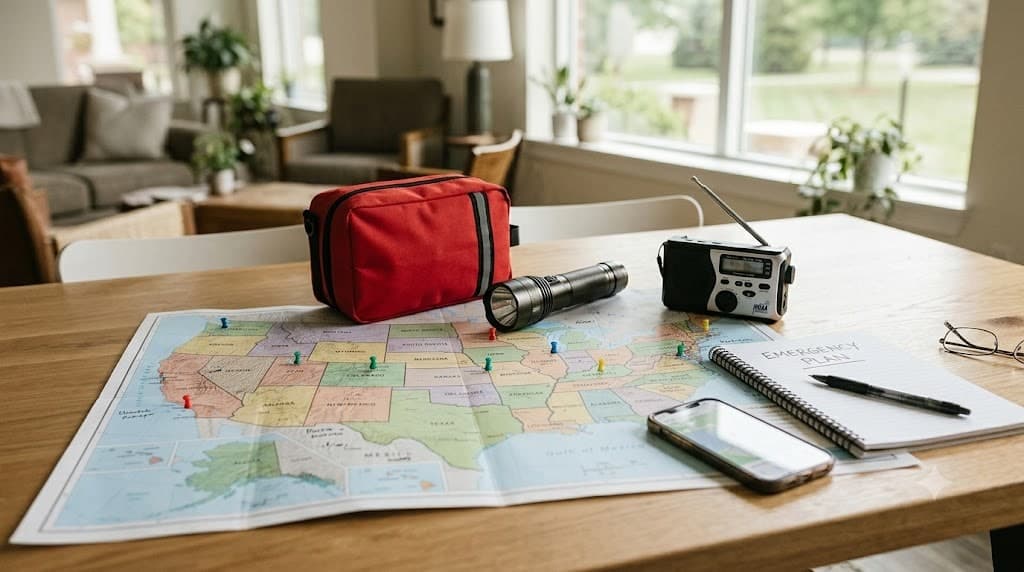
These state pages are calm starting points for household preparedness. Each guide highlights common hazards, official sources, and related Disaster Kit Pro guides so you can build a practical plan before conditions become stressful.
For active danger, evacuation decisions, road closures, outages, public health guidance, or emergency response, use local officials and official alert sources.
Available states
State disaster preparedness guides
California households prepare for a wide range of hazards, from earthquakes and wildfires to heat waves, flooding, landslides, power outages, drought, and coastal tsunami risk. Preparedness in California works best when it is local, practical, and updated before seasonal conditions change.
TexasSouthTexas households prepare for a wide range of hazards, including hurricanes, flash flooding, tornadoes, severe thunderstorms, extreme heat, winter storms, drought, wildfire risk, and power outages. Preparedness works best when families follow local alerts, know evacuation routes, and keep flexible plans for both fast-moving and long-duration disruptions.
FloridaSouthFlorida households prepare for hurricanes, storm surge, flooding, extreme heat, severe thunderstorms, tornadoes, wildfire risk, and power outages. Because many hazards can affect travel, utilities, homes, pets, and communication, the most useful plan is simple, local, and ready before storm season or extreme weather develops.
New YorkNortheastNew York households prepare for winter storms, lake-effect snow, coastal flooding, tropical remnants, severe thunderstorms, extreme heat, river flooding, and power outages. Preparedness should reflect local geography, from dense urban neighborhoods and coastal communities to mountain towns, river valleys, and lake-effect snow belts.
PennsylvaniaNortheastPennsylvania's diverse geography makes it vulnerable to a wide range of natural hazards, with flooding and winter storms leading as the most frequent threats. Preparedness requires an understanding of localized risks from the Great Lakes region to the Atlantic coastal impacts.
IllinoisMidwestIllinois faces a range of weather hazards typical of the Midwest. Tornadoes, severe thunderstorms, flooding, winter storms, extreme heat, and related power outages are the most common threats. Being prepared with an emergency kit, family plan, and awareness of local risks helps households stay safe.
OhioMidwestOhio faces a mix of Midwest and Great Lakes hazards, including severe thunderstorms, tornadoes, flooding, winter storms, lake-effect snow in northern counties, extreme heat, and weather-related power outages.
GeorgiaSouthGeorgia faces a mix of inland, coastal, and Southern weather hazards, including severe thunderstorms, tornadoes, flooding, extreme heat, hurricanes or tropical remnants, winter weather, and power outages.
North CarolinaSouthNorth Carolina faces coastal, Piedmont, and mountain hazards, including hurricanes, storm surge, flooding, severe thunderstorms, winter weather, landslides, extreme heat, and power outages.
MichiganMidwestMichigan faces a Great Lakes mix of hazards, including winter storms, lake-effect snow, severe thunderstorms, tornadoes, flooding, extreme heat, power outages, and shoreline hazards.
New JerseyNortheastNew Jersey's coastal location and dense population make it vulnerable to a range of natural hazards. Being prepared with a family plan, emergency kit, and knowledge of local risks helps protect lives and property.
VirginiaSouthVirginia faces coastal, Piedmont, and mountain-region hazards, including hurricanes or tropical remnants, flooding, coastal storm surge, severe storms, tornadoes, winter weather, heat, and power outages.
Useful tip
Use your state guide as a starting point, then turn it into action with a household emergency kit, a written family communication plan, printable checklists, and official-source links from the emergency management agency directory.

Morgan Hale
Need a practical next step?
Ask Morgan about disasters, preparedness, checklists, supplies, or practical next steps.