Winter storms and ice
Snow, ice, freezing rain, blizzards, and cold temperatures can disrupt roads, transit, utilities, heating, schools, and daily routines.
Northeast preparedness
New York households prepare for winter storms, lake-effect snow, coastal flooding, tropical remnants, severe thunderstorms, extreme heat, river flooding, and power outages. Preparedness should reflect local geography, from dense urban neighborhoods and coastal communities to mountain towns, river valleys, and lake-effect snow belts.
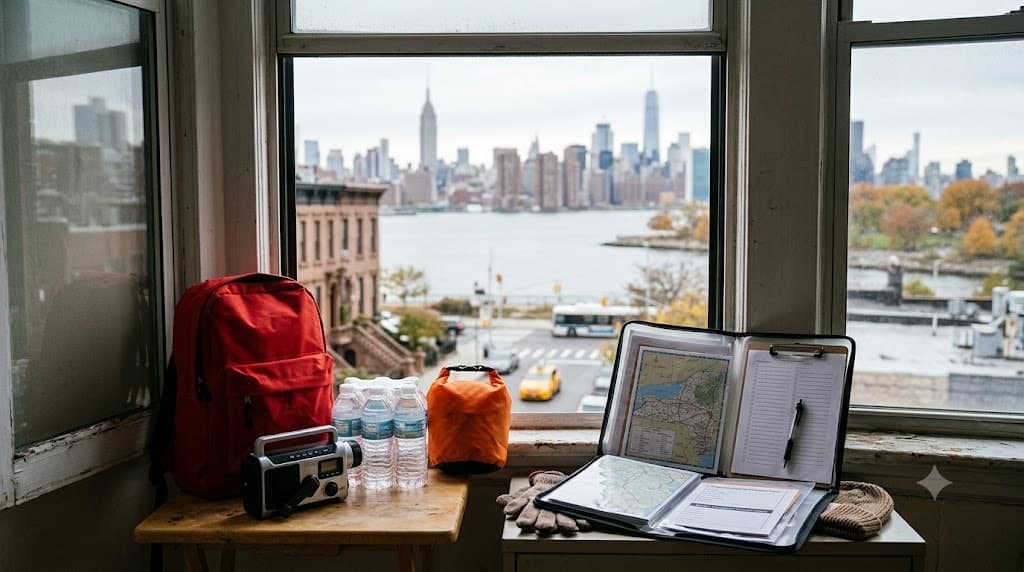
New York’s hazards vary widely by region. Western and northern communities may face lake-effect snow, blizzards, ice, and long winter travel disruptions. Downstate and Long Island communities may face coastal flooding, storm surge, tropical remnants, nor’easters, and dense urban outage challenges. River valleys and low-lying areas can experience flooding from heavy rain, snowmelt, or stormwater. Severe thunderstorms can bring damaging wind, hail, lightning, and brief tornadoes. Extreme heat can strain households, transit, outdoor activity, and people without reliable cooling. A practical New York preparedness plan should include local alert sign-ups, winter and outage supplies, flood awareness, safe travel decisions, communication backups, pet planning, and organized documents before severe weather develops.
New York
Snow, ice, freezing rain, blizzards, and cold temperatures can disrupt roads, transit, utilities, heating, schools, and daily routines.
Areas near the Great Lakes can receive intense, localized snow bands that create fast-changing road conditions and extended travel disruption.
Coastal communities, including parts of New York City, Long Island, and the lower Hudson region, can face coastal flooding, high surf, erosion, and storm impacts.
Tropical systems can bring heavy rain, coastal flooding, damaging wind, inland flooding, and power outages even after weakening.
Heavy rainfall, snowmelt, saturated ground, and drainage limits can cause river, stream, basement, and urban flooding in many communities.
Hot and humid weather can affect older adults, young children, outdoor workers, pets, transit users, and households without dependable cooling.
Thunderstorms, damaging wind, lightning, downed trees, and utility disruptions can interrupt travel, communication, refrigeration, and home routines.
State emergency management source for preparedness, emergency planning, hazard information, response coordination, and recovery resources.
State household preparedness guidance for making a plan, building emergency supplies, staying informed, and helping others.
State public health information about heat risks, heat illness, cooling options, and practical heat safety steps.
Federal weather safety source for winter storms, floods, hurricanes, heat, lightning, severe storms, and tornadoes.
NOAA source for hurricane hazards, storm surge, watches and warnings, evacuation planning, and tropical weather preparedness.
Official New York traveler information source for road conditions, traffic, transit updates, and travel disruption awareness.
Educational state history profile for New York from America250Atlas, a visual guide for the United States 250th anniversary.
Morgan Hale
Ask Morgan about disasters, preparedness, checklists, supplies, or practical next steps.