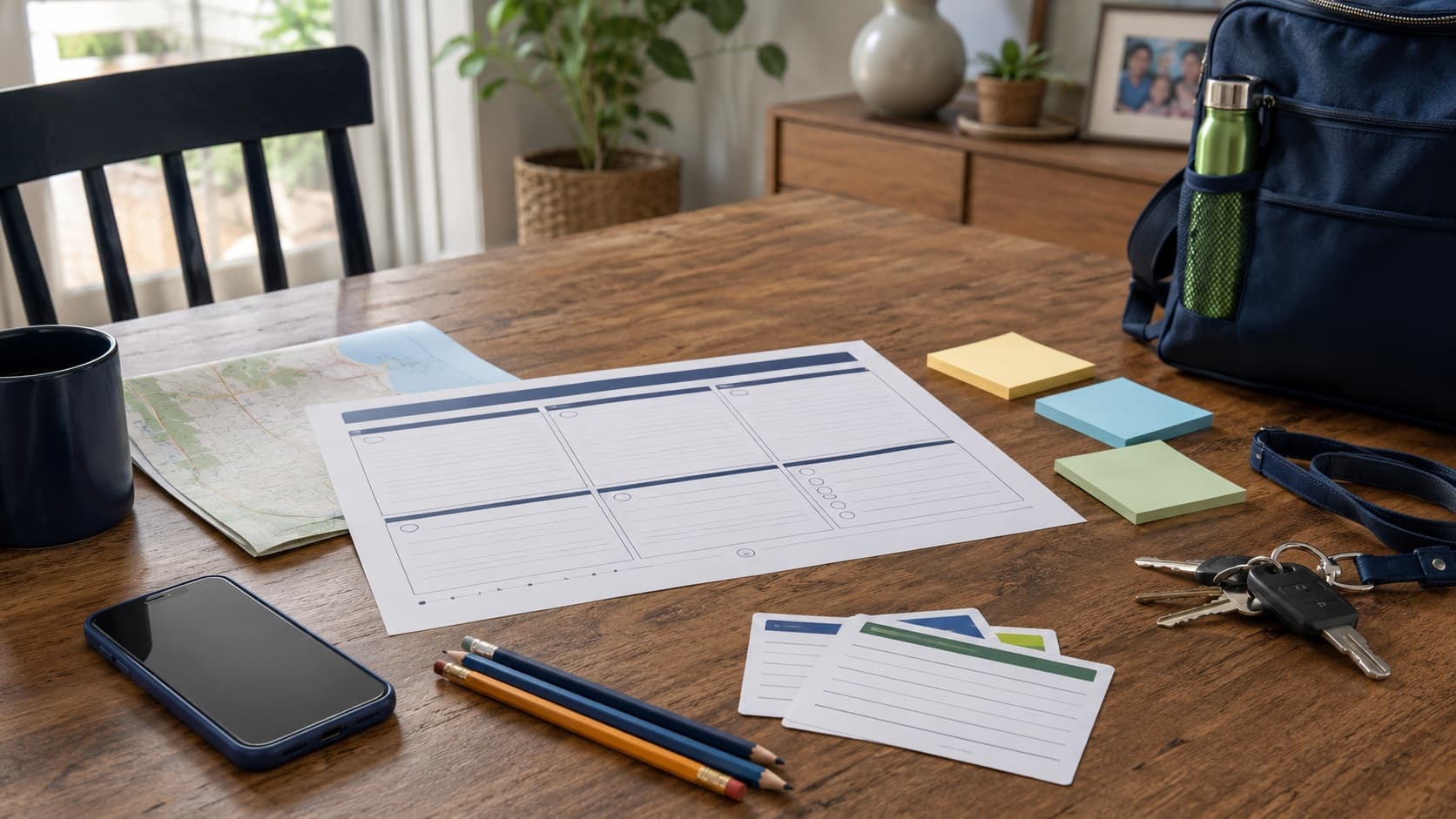
Preparedness guide

Family Emergency Communication Plan

A family plan helps household members know how to reach each other, where to meet, and which official sources to follow. It should include children, older adults, pets, disabilities, access needs, and people who may not live in the same home. Practice makes the plan easier to use when routines are disrupted.

Start with these 3 steps

  1. Write contact numbers.
  2. Choose meeting places.
  3. Practice the plan.

Overview

What this means

A family plan is a simple set of decisions your household can use when normal communication, transportation, school routines, work schedules, or housing access is disrupted. It explains who to contact, where to meet, how to receive alerts, how to include pets, and what to do if people are separated. The plan should be realistic for renters, homeowners, people without cars, people with disabilities, and households with shared caregiving responsibilities.

Who may be affected

  • Households with children
  • Older adults living alone
  • People with disabilities or access needs
  • Pet owners
  • Roommates or shared households
  • Separated or blended families
  • People without reliable transportation
  • Caregivers and support networks

Common misunderstandings

  • Everyone will remember phone numbers
  • One meeting place is enough
  • Plans only matter for parents
  • Pets can be handled later
  • Practice will scare children
  • A plan replaces official instructions

Before

Prepare before

Create a contact list

Start with a written contact list that works even when phones are lost, locked, or out of power. Include household members, an out-of-area contact, schools, caregivers, building management, utility providers, medical or device contacts when relevant, and pet information. Keep copies in wallets, backpacks, kits, and accessible household locations.

  • Write key numbers on paper.
  • Choose an out-of-area contact if possible.
  • Include school, caregiver, and building contacts.
  • Update the list when numbers change.

Choose meeting places

Pick more than one meeting place because different disruptions affect different areas. Choose a nearby place outside the home, a neighborhood location, and an out-of-area contact point if practical. Do not assume everyone can drive. Include walking routes, transit options, accessibility needs, children’s pickup rules, and pet handling in the plan.

  • Choose a close meeting spot outside the home.
  • Choose a neighborhood or community meeting place.
  • Plan options that do not depend on a car.
  • Include pets and mobility needs.

Know alerts and official sources

A family plan should clearly say which alerts and public sources the household will trust. Local emergency management, weather offices, public health agencies, schools, utilities, and transportation agencies may each share different updates. Write down how to receive alerts and remind everyone that official instructions come before rumors, social posts, or guesses.

  • Sign up for local alerts if available.
  • Save trusted weather, utility, and road sources.
  • Write down school and workplace notification methods.
  • Teach the household to verify information.

Assign flexible household roles

Roles reduce confusion, but they should stay flexible because not everyone may be home or able to help. Decide who usually gathers pets, who brings the kit, who checks on a neighbor, who contacts the out-of-area person, and who helps children or people with access needs. Create backups for every role.

  • Assign simple tasks by ability and availability.
  • Name backups for important roles.
  • Include children in age-appropriate ways.
  • Avoid roles that require unsafe actions.

During

During the event

Use the contact plan

When an alert, outage, evacuation notice, or sheltering instruction disrupts normal routines, use the contact plan early. Send short messages that say where you are, whether you are safe, and what official source you are following. If phones are unreliable, try texts before calls and use the out-of-area contact to relay updates.

  • Send short status messages.
  • Contact the out-of-area person if separated.
  • Keep phone use brief to preserve battery.
  • Use paper numbers if a phone contact list is unavailable.

Follow the right meeting choice

Use the meeting place that fits the situation, not the one that is most familiar. A nearby outdoor spot may work for a building evacuation, while a community location may fit a longer disruption. If officials give evacuation or shelter guidance, follow local official instructions rather than trying to meet somewhere unsafe.

  • Match the meeting place to the disruption.
  • Avoid flooded, closed, or unsafe routes.
  • Tell the out-of-area contact which place you are using.
  • Change plans if officials issue new instructions.

Support children and dependents

Children, older adults, and people who depend on support may need simple explanations and repeated reassurance. Use calm words, short instructions, and familiar routines where possible. Follow school, childcare, caregiver, facility, and local official instructions for pickup, sheltering, or reunification. Do not create unofficial pickup changes that could confuse staff.

  • Use calm, direct instructions.
  • Follow school or caregiver pickup rules.
  • Keep comfort items nearby if available.
  • Share updates with trusted caregivers.

Include pets and access needs

Pets, mobility equipment, communication aids, medication routines, and powered devices can shape the plan during a disruption. Use the roles and supplies you prepared, but do not delay urgent protective action to gather nonessential items. For medical devices, medications, disability planning, or transportation support, use guidance from providers, utilities, or local emergency management.

  • Gather pet carriers, leashes, and records if practical.
  • Bring chargers, mobility aids, and written instructions.
  • Use provider guidance for device or medication needs.
  • Ask local officials about accessible assistance options.

After

After the event

Confirm everyone is accounted for

After the immediate disruption, confirm where household members, pets, and supported contacts are. Use the contact list and out-of-area contact if direct communication is difficult. Keep messages clear and factual. If someone may be in urgent danger, call emergency services or follow local official instructions rather than waiting for a routine check-in.

  • Check household members and pets.
  • Update the out-of-area contact.
  • Share only confirmed information.
  • Use emergency services for urgent danger.

Update contacts and meeting places

Plans become outdated when numbers, schools, jobs, caregivers, buildings, transit routes, or household needs change. After using the plan, update anything that slowed communication or made meeting difficult. If a meeting place was inaccessible, choose a better option. Keep the revised plan in both paper and digital forms.

  • Correct outdated phone numbers.
  • Replace meeting places that did not work.
  • Update school, caregiver, and building contacts.
  • Print or share the revised plan.

Review household roles

Talk through roles while the experience is still fresh. Ask whether tasks were clear, realistic, and safe. A role that depends on one person, one vehicle, or one phone may need a backup. Keep the review kind and practical. The point is to reduce future confusion, not to blame anyone.

  • Ask what was confusing.
  • Add backups for key roles.
  • Remove tasks that felt unsafe.
  • Make roles simpler where possible.

Practice and refresh the plan

A family plan works better when people have practiced it calmly. Schedule short practice moments, such as reading the contact list, walking to a meeting place, or asking children what they would do after an alert. Practice should be reassuring, not frightening. One practical step is to review the plan during a normal monthly routine.

  • Practice texting the out-of-area contact.
  • Walk to a nearby meeting place if safe.
  • Review pet and access steps.
  • Set a reminder to revisit the plan.

Pair this guide with a practical emergency kit, a written family communication plan, and the family emergency communication plan checklist. If the event could affect property or records, review insurance basics and important documents before conditions become stressful.

Scenarios

Practice steady decisions

Phones are working poorly

A disruption causes slow service, and household members are in different places.

Steady action: Send short texts, use the out-of-area contact, and share only where you are, whether you are safe, and what you plan next.

Official reminder: Follow local official instructions for evacuation, sheltering, road closures, or reunification.

School pickup changes

A school or childcare program announces a delayed release or different pickup process.

Steady action: Follow the school’s official instructions, notify the household contact, and avoid creating informal changes that may confuse staff.

Official reminder: Use official school, childcare, and local emergency guidance for reunification.

A meeting place is blocked

The household’s usual meeting place cannot be reached because of a closure or unsafe route.

Steady action: Switch to the backup meeting place, tell the out-of-area contact, and avoid closed or unsafe areas.

Official reminder: Respect official closures and follow local official instructions.

A pet or device need slows leaving

An evacuation notice makes it clear that pet supplies or a powered device should have been easier to gather.

Steady action: Take essential items that are ready, avoid unsafe delay, and update the plan afterward so these needs are easier next time.

Official reminder: Use provider, utility, and local emergency management guidance for device, access, and evacuation planning.

Checklist preview

Family Emergency Communication Plan checklist

  • Write contact numbers.
  • Choose meeting places.
  • Practice the plan.
View checklist hub

Morgan Hale

Need a practical next step?

Ask Morgan about disasters, preparedness, checklists, supplies, or practical next steps.