Preparedness guide

Winter Storm Preparedness

Winter storms can bring cold, ice, snow, travel disruption, power outages, and heating concerns. A steady plan helps households stay informed, warm, connected, and cautious.

Start with these 3 steps

  1. Track official road guidance.
  2. Prepare outage supplies.
  3. Check heat and medication needs.

Overview

What this means

A winter storm may involve snow, ice, freezing rain, dangerous cold, strong wind, or several of these at once. Impacts can include unsafe roads, delayed services, school closures, frozen pipes, power outages, and heating challenges. Preparedness means following official weather and road guidance, keeping basic supplies accessible, planning for medication and powered-device needs, and checking on people who may need extra support.

Who may be affected

  • People who rely on electric heat
  • Households with medical devices
  • Older adults living alone
  • Families with young children
  • Renters in drafty buildings
  • People with limited transportation
  • Outdoor workers
  • Neighbors with mobility limitations

Common misunderstandings

  • Snow amount is the only concern
  • Ice is easy to see and avoid
  • Short outages do not need planning
  • Any heater is safe indoors
  • Roads are safe once plowed
  • Neighbors will ask for help if needed

Before

Prepare before

Watch weather and road updates

Winter storm planning starts with knowing which sources to trust. Forecasts, watches, warnings, road closures, transit changes, and school updates may come from different agencies. Before storms arrive, identify your local weather office, emergency management channels, transportation department, utility provider, school alerts, and building management contacts if you rent.

  • Save official weather and road information sources.
  • Sign up for local alerts if available.
  • Check transit, school, and workplace communication plans.
  • Write down utility outage reporting information.

Plan for warmth and power interruptions

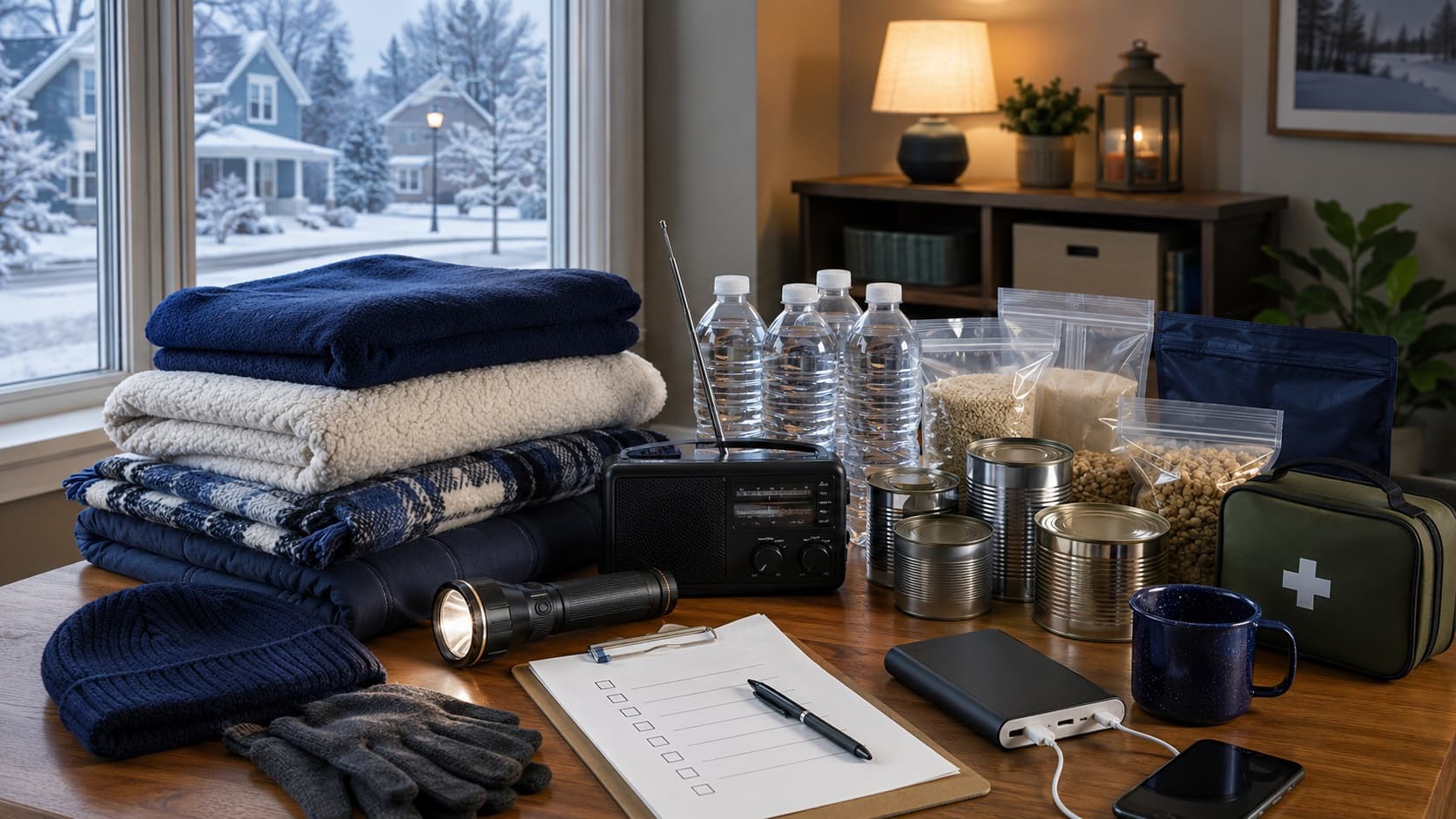
Cold weather outages can affect heat, lighting, cooking, elevators, internet, and medical equipment. Prepare calmly with layered clothing, blankets, flashlights, charged devices, and a plan for where to go if your home becomes too cold. Use heating equipment only as directed and follow local safety guidance for your building and area.

  • Keep warm layers and blankets easy to reach.
  • Charge phones and backup batteries before the storm.
  • Use only safe, approved indoor heating methods.
  • Know nearby warming locations if your area provides them.

Review medication and device needs

Some households need extra planning for refrigerated medication, oxygen equipment, mobility devices, home health routines, or other powered needs. Talk with medical professionals, device providers, or caregivers before winter weather if personal guidance is needed. Keep a written list of medications, device instructions, emergency contacts, and backup power or relocation options.

  • Keep medication lists and instructions on paper.
  • Charge mobility and communication devices.
  • Ask providers about backup plans before storms.
  • Plan transportation if relocation may be needed.

Prepare for limited travel

Winter storms can make roads, sidewalks, parking lots, and transit stops unsafe or unavailable. Avoid planning around last-minute errands. Keep basic food, water, baby supplies, pet supplies, and hygiene items available. If you must travel, check official road guidance first and accept delays or cancellations as part of the plan.

  • Complete essential errands before conditions worsen.
  • Keep pet and household basics stocked.
  • Plan for school or caregiver schedule changes.
  • Avoid nonessential travel during warnings.

During

During the event

Stay informed and limit travel

During a winter storm, staying off roads can be one of the most practical safety steps. Conditions may be worse than they appear, especially with ice, drifting snow, or poor visibility. Follow local official instructions, road closures, transit alerts, and weather updates. If urgent danger occurs, call emergency services.

  • Check official road conditions before traveling.
  • Delay nonessential trips.
  • Respect closures and travel advisories.
  • Keep devices charged while power is available.

Use heat and light safely

If power or heat is disrupted, use safe lighting and heating habits. Flashlights and battery lanterns are preferred over open flames. Do not use outdoor grills, generators, or fuel-burning equipment inside living spaces. Follow manufacturer instructions, building rules, and local guidance for any heating equipment.

  • Use flashlights instead of candles when possible.
  • Layer clothing and use blankets.
  • Never use outdoor equipment indoors.
  • Follow local guidance for warming centers if needed.

Protect household routines

Storm days can disrupt meals, medication timing, childcare, pet care, remote work, and sleep. Keep routines simple and visible. Write down medication times, check battery levels, keep paths clear inside the home, and make sure everyone knows where supplies are. Small routines reduce stress when normal services are delayed.

  • Keep medication schedules visible.
  • Use phones only as needed to preserve battery.
  • Keep walkways clear of clutter.
  • Store pet supplies in one accessible place.

Check on others carefully

Winter storms can be especially hard on neighbors who live alone, have limited mobility, or depend on others for transportation or heat. Check in by phone, text, or a safe nearby visit if conditions allow. Do not put yourself at risk on icy roads or sidewalks. Ask for local assistance when someone may need urgent help.

  • Call or text neighbors who may need support.
  • Share official warming or shelter information.
  • Avoid unsafe travel for check-ins.
  • Call emergency services for urgent danger.

After

After the event

Wait for road clearance guidance

After snow or ice stops falling, roads and sidewalks may still be unsafe. Plowed roads can refreeze, side streets may remain blocked, and transit may be delayed. Follow official road, transit, school, and workplace updates before resuming normal travel. Give crews room to clear streets, repair utilities, and manage hazards.

  • Check official road and transit updates.
  • Watch for ice on steps and sidewalks.
  • Avoid driving through closed areas.
  • Allow extra time for essential travel.

Check utilities and home conditions

When power or heat returns, check your home slowly. Look for leaks, unusual smells, damaged cords, spoiled food, or other concerns. Do not handle electrical, gas, plumbing, or heating problems yourself unless qualified. Contact the appropriate utility provider, property manager, or licensed professional for questions about repairs or safety.

  • Report outages or hazards to the utility provider.
  • Avoid damaged cords and wet electrical items.
  • Follow official food safety guidance after outages.
  • Contact building management if renting.

Restock and reset supplies

Winter storms often reveal which supplies were useful and which were missing. Restock batteries, water, easy meals, pet supplies, hygiene items, and medication basics when practical. Replace used items before the next storm. This is a good time to update phone numbers and review where supplies are stored.

  • Replace used batteries and flashlight supplies.
  • Restock basic food and water.
  • Update medication and contact lists.
  • Move supplies to easier storage if needed.

Review support needs

After a storm, check whether anyone in your household or nearby needed more help than expected. A better plan might include earlier transportation, a warming location, caregiver coordination, or backup charging for a device. One practical step is to write down the hardest moment and plan around it for next time.

  • Review medical device and medication planning.
  • Discuss backup transportation options.
  • Update neighbor or caregiver check-in plans.
  • Save official local resource links.

Pair this guide with a practical emergency kit, a written family communication plan, and the winter storm preparedness checklist. If the event could affect property or records, review insurance basics and important documents before conditions become stressful.

Scenarios

Practice steady decisions

Ice is forecast overnight

Local forecasts mention possible ice, and you have morning errands planned.

Steady action: Check official road guidance, delay nonessential travel, and finish needed errands before conditions worsen if possible.

Official reminder: Follow local weather, road, transit, and school instructions.

Heat stops working

Your home is getting colder during an outage or heating problem.

Steady action: Layer clothing, gather in the warmest practical room, use safe heat only, and consider official warming resources if needed.

Official reminder: Call emergency services for urgent danger and contact the appropriate utility or building provider.

A device needs charging

Someone in the household depends on a charged medical, mobility, or communication device.

Steady action: Use backup power if available, conserve battery, and follow the plan made with providers or caregivers.

Official reminder: Contact medical professionals, device providers, or emergency services for personal or urgent needs.

A neighbor may need help

An older neighbor has not answered a usual message during a winter storm.

Steady action: Try a phone or text check first, avoid unsafe travel, and use local assistance or emergency services if you believe there is urgent danger.

Official reminder: Follow local emergency guidance and do not put yourself at risk.

Checklist preview

Winter Storm Preparedness checklist

  • Track official road guidance.
  • Prepare outage supplies.
  • Check heat and medication needs.
View checklist hub

Morgan Hale

Need a practical next step?

Ask Morgan about disasters, preparedness, checklists, supplies, or practical next steps.