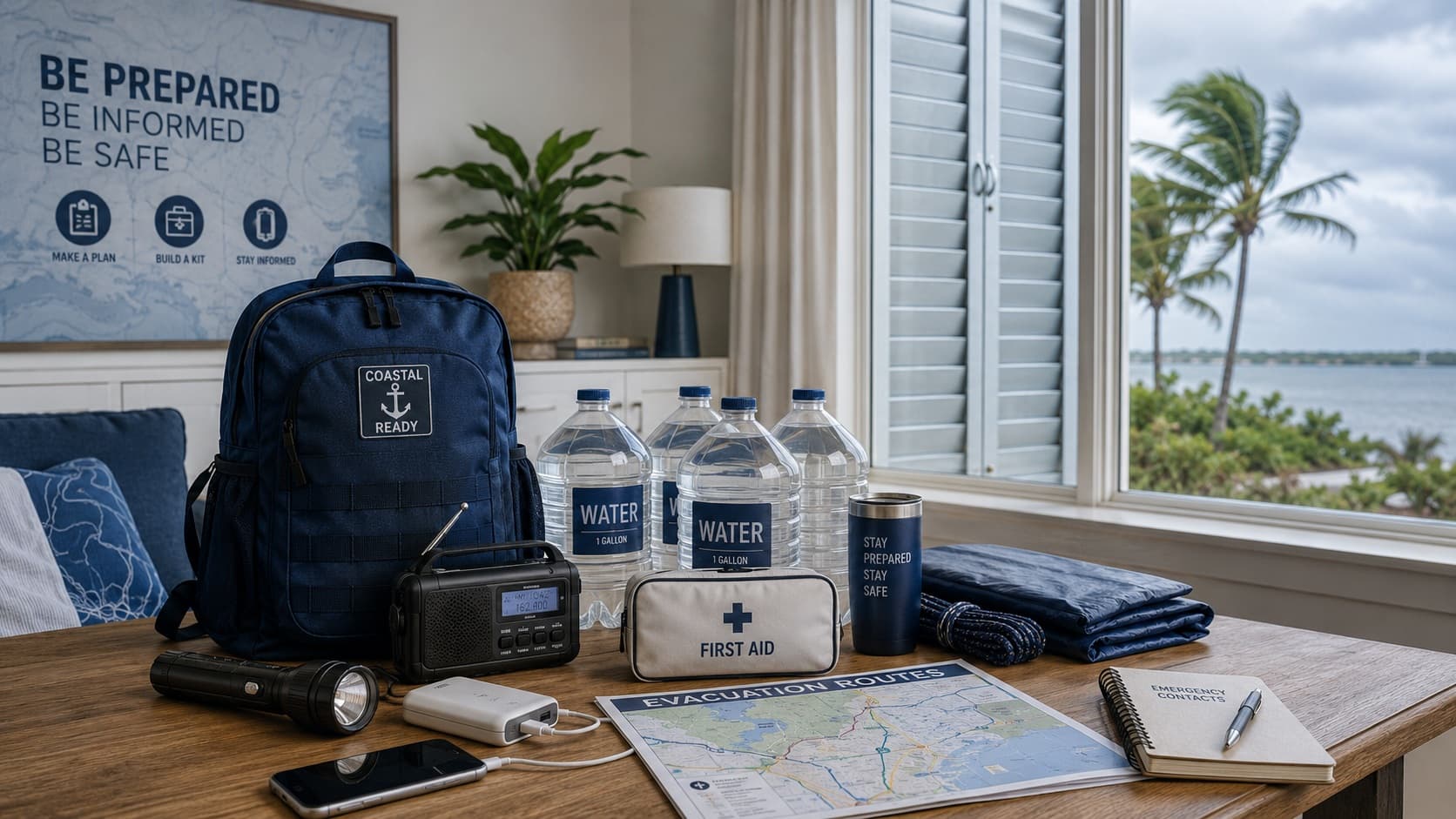
Preparedness guide

Hurricane Preparedness

Hurricanes can bring strong wind, heavy rain, flooding, storm surge, travel disruption, and power outages. A calm plan helps your household know what to do before alerts become urgent.

Start with these 3 steps

  1. Know your evacuation zone.
  2. Prepare outage supplies.
  3. Protect key documents.

Overview

What this means

A hurricane is a large tropical storm system that can affect households in several ways at once. The main concerns may include wind, rain, storm surge in coastal areas, flooding, blocked roads, damaged utilities, and long power interruptions. Preparedness is not about predicting every detail. It is about knowing your local alerts, having a flexible household plan, and being ready to follow local official instructions if conditions change.

Who may be affected

  • Coastal households
  • Renters in low-lying areas
  • People who rely on powered medical devices
  • Households with pets
  • Older adults living alone
  • Families with children
  • People without easy transportation
  • Residents in manufactured housing

Common misunderstandings

  • Only coastal homes need to prepare
  • Wind is the only concern
  • Evacuation zones are the same as flood zones
  • A small storm cannot cause long outages
  • Pets can be planned for at the last minute
  • Returning home is always safe once rain stops

Before

Prepare before

Know your local alert system

Start by learning how your area shares hurricane watches, warnings, evacuation notices, shelter information, and utility updates. Alerts may come from local emergency management, weather offices, official apps, radio, television, or community messages. A practical plan uses more than one source, especially if power or internet service becomes unreliable.

  • Sign up for local emergency alerts if available.
  • Write down trusted local information sources.
  • Keep a battery-powered or hand-crank radio accessible.
  • Review alert meanings with everyone in the household.

Understand evacuation zones

Evacuation planning works best before a storm is nearby. Find out whether your home, workplace, school, or regular caregiving location is in an evacuation zone. Choose more than one place you could go, including options that do not depend on a hotel or a long drive. Always follow local official instructions when evacuation orders are issued.

  • Look up your local evacuation zone ahead of time.
  • Plan routes that avoid low-lying roads when possible.
  • Include pets, mobility needs, and medications in the plan.
  • Share the plan with a trusted contact outside the area.

Prepare for wind, rain, and outages

Hurricane conditions may interrupt power, water, transportation, and communication. Prepare calmly by gathering practical household supplies over time rather than waiting for a rush. Think about lighting, phone charging, drinking water, simple food, hygiene, prescription routines, and safe indoor space away from windows if local officials advise sheltering in place.

  • Store flashlights where they are easy to find.
  • Charge phones and backup batteries before conditions worsen.
  • Keep basic food and water supplies ready.
  • Move loose outdoor items if you can do so safely.
  • Plan for several ways to receive updates.

Protect documents, pets, and contacts

Important paperwork can be hard to replace after a storm, and pets need advance planning just like people do. Make copies of key documents, store them in a protected place, and keep a simple contact list on paper. Include veterinary records, identification, leases, insurance contacts, medical information, and other records your household may need later.

  • Place copies of key documents in a water-resistant folder.
  • Take photos of important household items for your records.
  • Pack pet food, leashes, carriers, and vaccination information.
  • Write emergency contacts on paper in case phones fail.

During

During the event

Follow official instructions first

During a hurricane, conditions can change quickly and unevenly from one neighborhood to another. Treat local emergency management, weather offices, and public safety alerts as your primary sources. If you are told to evacuate, shelter, avoid roads, boil water, or stay away from specific areas, follow local official instructions rather than informal posts or rumors.

  • Keep alerts turned on if your phone has power.
  • Use trusted official sources before making major decisions.
  • Call emergency services if there is urgent danger.
  • Avoid spreading unconfirmed information.

Stay away from windows and floodwater

If sheltering in place, choose the safest available interior area based on local guidance and your building. Stay away from windows, glass doors, and rooms where wind-driven debris could be a concern. Never walk, swim, or drive through floodwater. Water depth, current, road damage, and hidden hazards are difficult to judge by sight.

  • Move to an interior room if advised.
  • Keep children and pets away from doors and windows.
  • Do not enter standing or moving water.
  • Avoid elevators if power is unstable.

Use outage supplies safely

Power outages can make a storm feel more stressful, but simple habits help. Use flashlights instead of open flames where possible. Keep refrigerator and freezer doors closed as much as you can. Use generators, grills, and fuel-burning equipment only according to manufacturer directions and local safety guidance, never inside living spaces.

  • Use flashlights or battery lanterns for lighting.
  • Keep devices in low-power mode when possible.
  • Follow local guidance for food and water safety.
  • Never use outdoor fuel-burning equipment indoors.

Keep communication simple

Storm communication should be short, calm, and repeatable. Let one outside contact know where you are and what your plan is when it is safe to do so. Conserve phone battery by sending brief messages instead of long calls. Check on household members, neighbors, and pets without taking unnecessary risks.

  • Send short status messages to trusted contacts.
  • Keep phones charged when power is available.
  • Use a paper contact list if a device is lost.
  • Check on nearby neighbors only when it is safe.

After

After the event

Return home cautiously

Do not assume it is safe to return just because wind or rain has stopped. Roads, bridges, power lines, water systems, and buildings may still be unsafe. Wait for official reentry guidance if you evacuated. When you arrive, look for obvious hazards from a safe distance and leave if conditions feel unstable or unsafe.

  • Wait for local reentry instructions.
  • Avoid downed wires and damaged utility areas.
  • Do not enter damaged structures if they seem unsafe.
  • Keep children and pets away from debris.

Document damage without rushing

When it is safe, take photos or notes for your household records before moving items. Do not put yourself at risk to document damage. Keep receipts for temporary needs if that is useful for your personal records. For questions about repairs, insurance, utilities, or housing requirements, contact the appropriate provider or licensed professional.

  • Take photos from safe areas only.
  • Write down dates, locations, and visible concerns.
  • Save receipts related to household recovery.
  • Contact qualified professionals for repair questions.

Use caution with cleanup

Cleanup can involve sharp objects, unstable materials, damp areas, spoiled food, and utility hazards. Work slowly and use basic protective habits. Do not handle electrical equipment or damaged utilities unless qualified. Follow local public health and emergency management guidance for debris, water, food, and sanitation concerns.

  • Wear sturdy shoes and gloves if cleaning.
  • Avoid mixing cleaning products.
  • Throw away food if officials advise it is unsafe.
  • Follow local debris and pickup instructions.

Reset and improve your plan

After the immediate disruption passes, take one practical step to improve your readiness for next time. Restock used supplies, update contacts, note what was missing, and talk through what worked. Preparedness is a cycle, not a one-time project, and small adjustments make the next storm easier to manage.

  • Replace batteries, water, and used supplies.
  • Update your evacuation and communication plan.
  • Review pet and medication needs.
  • Save lessons learned while they are fresh.

Pair this guide with a practical emergency kit, a written family communication plan, and the hurricane preparedness checklist. If the event could affect property or records, review insurance basics and important documents before conditions become stressful.

Scenarios

Practice steady decisions

An evacuation order is issued

Your local officials issue an evacuation order for your zone before conditions become severe.

Steady action: Use the route and destination you planned, bring essential documents and pet supplies, and leave early enough to avoid rushing.

Official reminder: Follow local official instructions about timing, routes, shelters, and reentry.

Power goes out overnight

The lights go out while wind and rain are still affecting the area.

Steady action: Use flashlights, conserve phone battery, avoid candles if possible, and keep refrigerator and freezer doors closed.

Official reminder: Watch for utility updates and local safety messages when service is available.

A neighbor asks about flooded roads

Someone nearby is unsure whether a road with standing water is safe to cross.

Steady action: Encourage waiting, turning around, and checking official road information instead of guessing from appearance.

Official reminder: Never enter floodwater, and follow local road closure and emergency instructions.

You return and see damage

After officials allow return, you notice debris, possible water damage, and a strange smell near the home.

Steady action: Stay outside if anything feels unsafe, document only from a safe location, and contact the appropriate utility or qualified professional.

Official reminder: Follow official reentry, utility, and public health guidance before cleanup.

Checklist preview

Hurricane Preparedness checklist

  • Know your evacuation zone.
  • Prepare outage supplies.
  • Protect key documents.
View checklist hub

Morgan Hale

Need a practical next step?

Ask Morgan about disasters, preparedness, checklists, supplies, or practical next steps.