What Insurance Can and Cannot Do
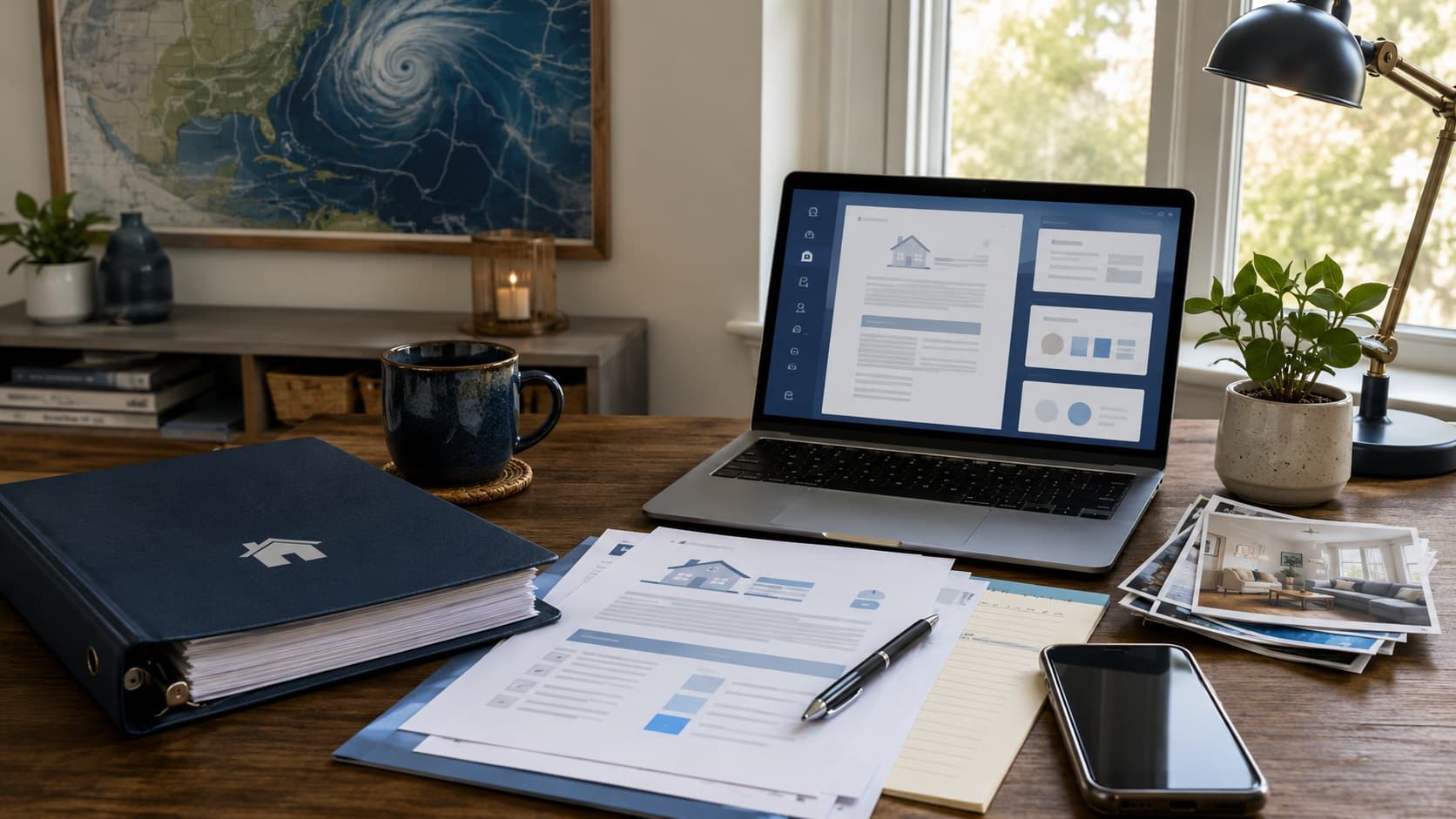
Insurance may help with certain covered losses after a disruption, but it does not prevent damage, guarantee full recovery, or replace official emergency guidance. A useful household plan combines policy awareness, document organization, alerts, evacuation or shelter decisions, and realistic recovery contacts.
- Know which policies you have and where the current declarations pages are stored.
- Do not assume a disaster name automatically means coverage applies.
- Use official alerts and local instructions for safety decisions.
- Ask qualified professionals about coverage, repairs, health, legal, or financial concerns.
Homeowners Insurance Basics
Homeowners policies often include several parts, such as dwelling, other structures, personal property, liability, and loss of use. The details vary widely. The important preparedness task is to know your limits, deductibles, exclusions, valuation method, claim contact, and whether any hazard-specific deductible may apply.
- Review the declarations page and coverage sections annually.
- Ask how wind, hurricane, wildfire, roof, water, and power-related losses are handled.
- Confirm whether replacement cost or actual cash value applies to key categories.
- Keep insurer, agent, mortgage, and repair contact information together.
Renters Insurance Basics
Renters insurance generally focuses on personal belongings, liability, and loss of use rather than the building itself. A landlord's policy may cover the building but not a renter's personal property. Renters can prepare by documenting belongings, understanding limits, and asking how temporary living expenses are handled.
- Keep a copy of your lease, policy, and building contact information.
- Document belongings with photos, serial numbers, or receipts when available.
- Ask whether belongings are valued at replacement cost or actual cash value.
- Confirm what happens if the rental becomes temporarily unlivable after a covered loss.
Flood Insurance Basics
Flood damage is often treated separately from standard homeowners and renters policies. Flood insurance may have separate building and contents coverage, separate deductibles, eligibility rules, and waiting periods. Households in and outside mapped high-risk areas can still have flood questions worth asking before heavy rain or coastal storms.
- Ask whether your current policy excludes flood damage.
- Ask about separate flood building and contents coverage.
- Renters should ask whether their belongings need separate contents coverage.
- Use official NFIP, state insurance department, insurer, or licensed professional resources.
Wildfire, Wind, and Hurricane Questions
Wildfire, wind, and hurricane-related losses can involve special deductibles, exclusions, roof rules, smoke questions, evacuation expenses, debris removal, or state-specific consumer protections. Do not rely on assumptions from another state or another person's policy. Ask your insurer how your own policy responds.
- Ask whether wind or hurricane deductibles differ from your standard deductible.
- Ask how smoke, ash, debris, trees, fences, and outbuildings are addressed.
- Ask whether evacuation or temporary living costs require a covered property loss.
- Save written answers or policy references for later review.
Documentation and Home Inventory
A home inventory can make policy review and post-loss conversations less confusing. It does not need to be perfect. Start with photos or video of rooms, closets, storage areas, important equipment, and receipts for higher-value items when available. Store copies where you can reach them after an outage or evacuation.
- Photograph each room from several angles.
- Record model numbers or serial numbers for major items when practical.
- Keep receipts, appraisals, or purchase records for selected items.
- Store copies digitally and in a protected physical folder if possible.
Claim Preparation Basics
After a loss, safety and official instructions come first. When it is safe, document visible damage, prevent further damage only as advised and safe, save receipts, and contact your insurer through official channels. Avoid signing repair agreements under pressure, and ask questions before authorizing work.
- Take photos and notes from safe areas only.
- Report claims through official insurer or agent channels.
- Keep claim numbers, adjuster names, dates, and receipts together.
- Contact licensed professionals for repair, legal, insurance, tax, or financial questions.