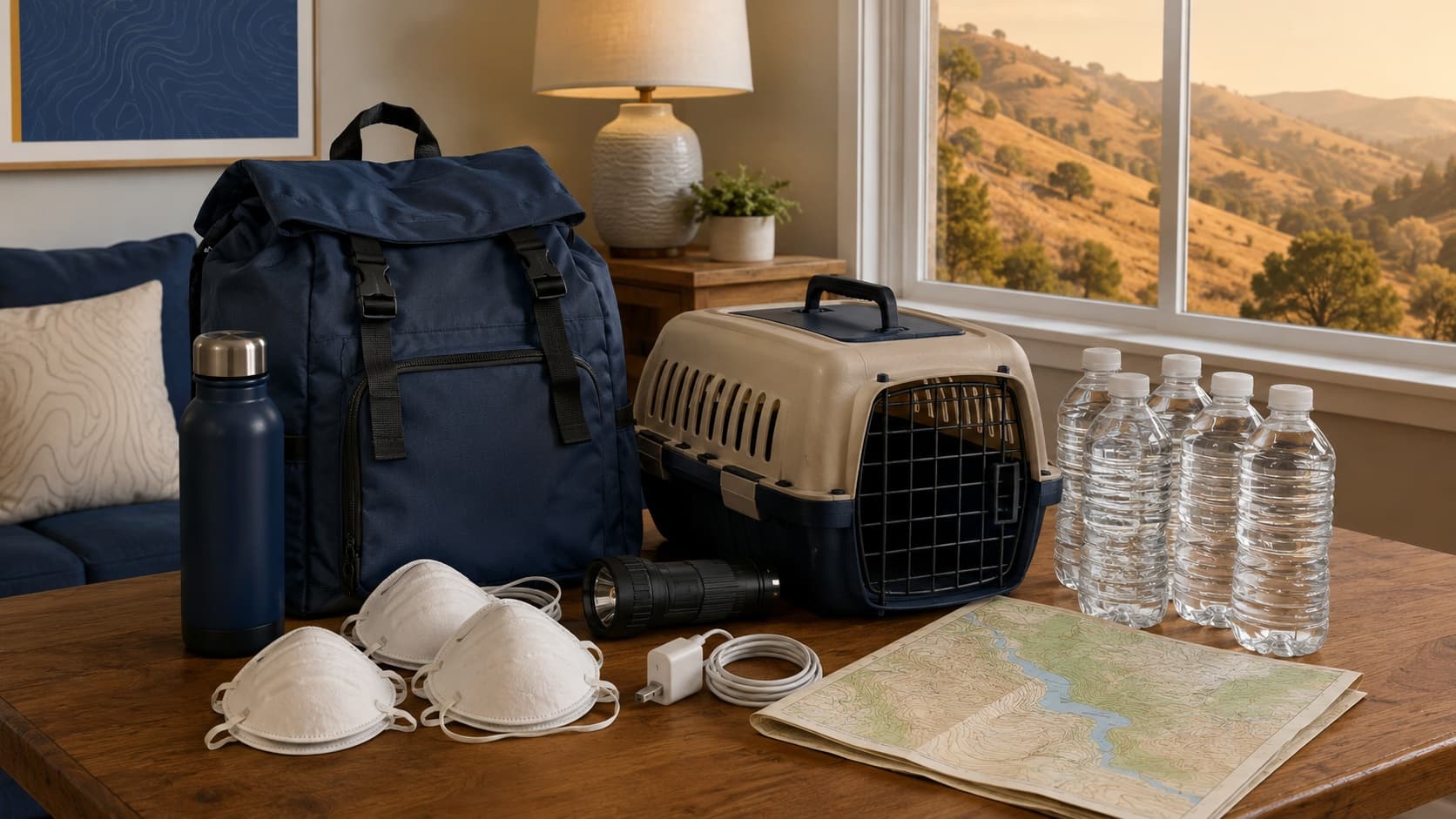
Preparedness guide

Wildfire Readiness

Wildfire readiness means being prepared for alerts, evacuation, smoke, utility disruption, and careful return home. A simple plan can help households act earlier and with less confusion.

Start with these 3 steps

  1. Sign up for alerts.
  2. Pack go-bags early.
  3. Plan for pets.

Overview

What this means

Wildfire preparedness focuses on acting early when local conditions change. Fires can affect households through evacuation notices, road closures, smoke, power shutoffs, damaged utilities, and limited access to neighborhoods. Readiness includes knowing alert levels, keeping go-bags and documents accessible, planning for pets and transportation limits, reducing nearby combustible clutter where practical, and waiting for official return instructions before going back.

Who may be affected

  • Homes near wildland areas
  • Renters in evacuation zones
  • People with breathing sensitivities
  • Households with pets or livestock
  • Older adults living alone
  • People without reliable transportation
  • Outdoor workers
  • Residents near smoke-prone areas

Common misunderstandings

  • Only rural homes need a wildfire plan
  • Smoke is only a problem near flames
  • Evacuation can wait until the last minute
  • A go-bag is only for long trips
  • Pets can be gathered quickly under stress
  • Returning is safe as soon as roads reopen

Before

Prepare before

Know alerts and evacuation terms

Wildfire alert systems can differ by community, so learn your local terms before there is pressure. Know how evacuation warnings, orders, shelter information, and road closures are shared. Sign up for official alerts if available, and choose backup information sources in case phone service, internet access, or power becomes unreliable.

  • Enroll in local emergency alerts if available.
  • Write down trusted official information sources.
  • Review evacuation terms with the household.
  • Keep a backup radio or charging option ready.

Prepare go-bags and documents

A wildfire go-bag is not about panic. It is a practical way to leave quickly if officials tell you to go. Keep essentials where they are easy to grab, including identification copies, medication information, basic hygiene items, phone chargers, glasses, pet supplies, and a written contact list. Adjust the bag for renters, children, older adults, and accessibility needs.

  • Pack copies of key documents.
  • Include medication lists and essential personal items.
  • Keep chargers and a paper contact list together.
  • Refresh food, water, and pet items regularly.

Plan for pets and transportation

Pets often make evacuation more complicated if planning starts late. Decide how you would transport each animal, where supplies are kept, and which destinations may allow pets. If you do not have a car, identify transit options, neighbors, local assistance information, or community resources before conditions become urgent.

  • Keep carriers, leashes, and pet records accessible.
  • List pet-friendly destinations when possible.
  • Plan transportation options beyond one vehicle.
  • Ask local officials about evacuation assistance resources.

Use basic defensible-space habits

Defensible-space work should follow local fire agency guidance and the rules for your property, lease, or building. At a household level, it often starts with reducing clutter that can burn near buildings, clearing dry leaves from reachable areas, and keeping exits accessible. Do only what is safe and allowed for your situation.

  • Keep exits, walkways, and access areas clear.
  • Move combustible clutter away from doors when practical.
  • Dispose of dry yard waste according to local rules.
  • Ask property managers about shared-area responsibilities.

During

During the event

Leave early when told

If officials issue an evacuation order, leave as directed rather than waiting to see what happens. Conditions, visibility, traffic, and road access can change quickly. Bring go-bags, documents, medications, pets, keys, and phones if they are ready. Do not delay for belongings that are difficult to reach or replace.

  • Follow evacuation orders and routes.
  • Take go-bags and pet supplies if ready.
  • Close doors and windows if officials recommend it.
  • Tell a trusted contact where you are going.

Track smoke and indoor air guidance

Wildfire smoke can affect areas far from visible flames. Pay attention to local public health, air quality, and emergency management guidance. If advised to stay indoors, keep windows and doors closed as much as practical and reduce activities that add indoor smoke or particles. People with personal health concerns should seek advice from medical professionals.

  • Follow local public health smoke guidance.
  • Keep windows and doors closed when advised.
  • Limit outdoor activity when officials recommend it.
  • Use medical advice for personal health questions.

Keep communication brief and reliable

During a wildfire emergency, communication should help people know where you are and what you are doing. Use official sources for updates and send short messages to your household or outside contact. Avoid calling emergency lines for general information. If there is urgent danger, call emergency services right away.

  • Send short location and safety updates.
  • Use official maps and alerts when available.
  • Conserve phone battery during outages.
  • Avoid sharing unverified evacuation information.

Respect closures and access limits

Road closures, evacuation zones, and access limits can remain in place even when conditions look calmer. Do not try to enter restricted areas to retrieve belongings or check property. Fire, utility, road, and public safety crews may still be working. Following closures helps protect you and keeps routes available for response work.

  • Do not enter closed roads or evacuation areas.
  • Avoid sightseeing near affected neighborhoods.
  • Keep routes clear for emergency vehicles.
  • Wait for official updates before returning.

After

After the event

Wait for official return instructions

Returning after a wildfire requires patience. Hazards may include damaged trees, utility lines, unstable structures, ash, poor air quality, and limited services. Wait until officials say your area is open. Even then, enter carefully, keep pets close, and leave if anything feels unsafe or if authorities provide new instructions.

  • Follow official reentry notices.
  • Avoid downed lines and damaged utility areas.
  • Keep children and pets away from ash and debris.
  • Leave immediately if conditions change.

Document from safe places

If you need household records, take photos or notes only from safe locations and do not climb over debris or enter unstable buildings. Record dates, visible damage, and official notices. For questions about property damage, utilities, insurance, repairs, or habitability, contact the appropriate provider, property owner, local agency, or licensed professional.

  • Photograph visible damage from safe areas.
  • Keep copies of official notices.
  • Save receipts for temporary household needs.
  • Ask qualified professionals about repairs or utilities.

Use care around ash and debris

Ash and debris can irritate skin, eyes, and lungs and may hide sharp or unstable materials. Follow local public health and cleanup guidance. Avoid stirring up dust when possible, and do not handle hazardous materials or utility equipment yourself. People with health concerns should consult medical professionals or local public health guidance.

  • Wear sturdy shoes and gloves for basic cleanup.
  • Avoid sweeping ash into the air.
  • Follow local disposal instructions.
  • Keep pets away from debris piles.

Update your wildfire plan

After the event, review what helped and what was missing. Restock go-bags, update documents, improve pet planning, and note any transportation challenges. One practical step might be moving the go-bag closer to the door or saving official alert links. Preparedness improves through small, honest adjustments.

  • Replace used go-bag supplies.
  • Update contact and medication lists.
  • Review transportation and pet plans.
  • Ask property managers about future mitigation steps.

Pair this guide with a practical emergency kit, a written family communication plan, and the wildfire readiness checklist. If the event could affect property or records, review insurance basics and important documents before conditions become stressful.

Scenarios

Practice steady decisions

An evacuation warning is issued

Your area receives an evacuation warning, but there is not yet an order to leave.

Steady action: Gather go-bags, documents, medications, pet supplies, and transportation plans so leaving will be easier if conditions change.

Official reminder: Monitor official alerts and follow local official instructions if an order is issued.

Smoke arrives before flames are nearby

The sky is smoky, and people in your household are unsure whether outdoor activities should continue.

Steady action: Check local public health and air quality guidance, reduce outdoor activity if advised, and use medical advice for personal concerns.

Official reminder: Follow local health officials for smoke-related public guidance.

A pet carrier is missing

You realize one pet carrier or leash is not in its usual place during a high-alert period.

Steady action: Find or replace the missing transport item early, and keep pet records, food, and comfort items together.

Official reminder: Follow evacuation and shelter guidance from local officials, including pet-related instructions.

You want to check your home

You hear that some roads have reopened and want to look at your property.

Steady action: Wait for official reentry guidance for your specific area and avoid restricted roads or damaged utility zones.

Official reminder: Do not return until officials say it is safe for your area.

Checklist preview

Wildfire Readiness checklist

  • Sign up for alerts.
  • Pack go-bags early.
  • Plan for pets.
View checklist hub

Morgan Hale

Need a practical next step?

Ask Morgan about disasters, preparedness, checklists, supplies, or practical next steps.