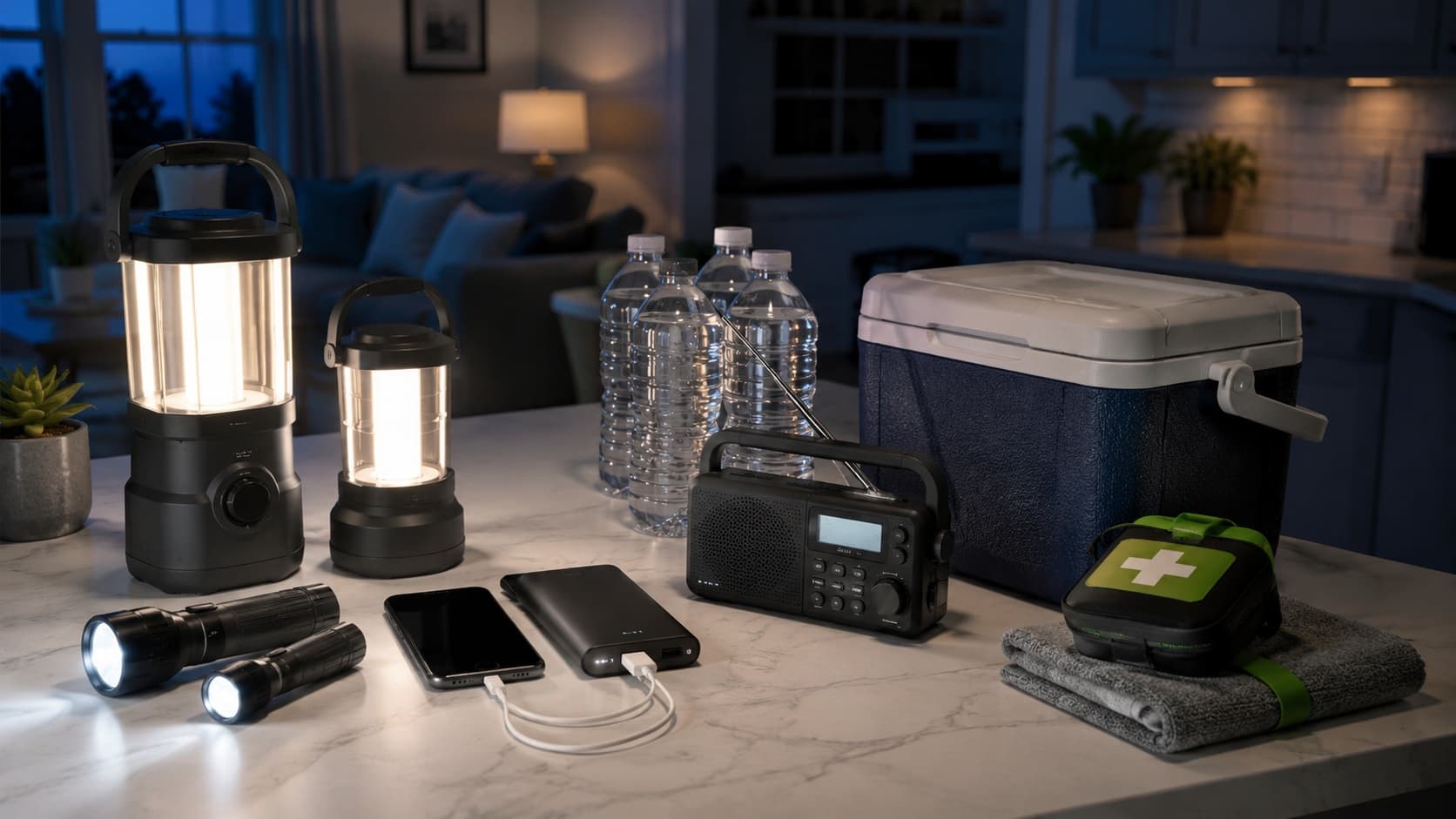
Preparedness guide

Power Outage Preparedness

Power outages can affect lighting, phones, food storage, medical devices, elevators, heating, cooling, and communication. A practical plan keeps essentials visible and decisions simple.

Start with these 3 steps

  1. Place flashlights nearby.
  2. Charge phones early.
  3. Know utility updates.

Overview

What this means

A power outage is a loss of electric service that may last minutes, hours, or longer depending on the cause and local conditions. It can affect more than lights, including communication, refrigeration, heat, cooling, water systems, garage doors, elevators, medical devices, and work or school routines. Preparedness means having safe lighting, backup communication, food and medication awareness, and trusted utility information ready before the power goes out.

Who may be affected

  • People with powered medical devices
  • Apartment residents using elevators
  • Households with refrigerated medication
  • Families with young children
  • People working from home
  • Pet owners
  • Older adults living alone
  • Homes needing electric heat or cooling

Common misunderstandings

  • Outages only affect lights
  • Candles are the best backup lighting
  • Food safety is obvious by smell
  • Phones will stay charged long enough
  • Generators can be used anywhere
  • Utility repair times are always predictable

Before

Prepare before

Set up safe lighting

Lighting is one of the easiest outage needs to prepare. Place flashlights or battery lanterns where people can find them in the dark, including near beds, exits, and common rooms. Avoid relying on candles as the main plan. Check batteries regularly, and make sure children know where lights are stored.

  • Keep flashlights in several easy locations.
  • Store extra batteries with the lights.
  • Use battery lanterns for shared spaces.
  • Avoid open flames when safer options are available.

Plan for phones and communication

Phones often become the main tool for alerts, utility updates, family messages, and emergency calls. Charge devices before forecasted storms or planned outages. Keep backup batteries charged if you have them, and write down important contacts on paper. A communication plan should work even if internet service is unavailable.

  • Charge phones when severe weather is expected.
  • Keep backup batteries ready if available.
  • Write important phone numbers on paper.
  • Use text messages to conserve battery.

Review food and medication needs

Outages can affect refrigerators, freezers, electric cooking, and refrigerated medication. Keep appliance doors closed as much as practical during an outage and follow official food safety guidance when deciding what to keep. For medication or health-related questions, ask medical professionals, pharmacists, or device providers before an outage occurs.

  • Keep fridge and freezer doors closed during outages.
  • Have no-cook food options if practical.
  • Write down medication storage needs.
  • Follow official food safety guidance after outages.

Prepare for powered equipment

Some households rely on powered medical devices, mobility equipment, internet-based phones, well pumps, garage doors, elevators, or climate control. Identify what stops working without electricity and what backup option exists. Contact providers, building managers, utility companies, or local agencies ahead of time if personal planning is needed.

  • List essential powered equipment.
  • Ask providers about backup plans.
  • Know how to manually open doors if applicable.
  • Plan for elevator outages if mobility is limited.

During

During the event

Report and monitor the outage

When power goes out, first check whether the outage is limited to your home or affecting the area, without taking unsafe actions. Report it to the utility provider if needed and use official outage maps, alerts, or phone lines for updates. Repair estimates can change, so treat them as helpful but not guaranteed.

  • Report the outage through official utility channels.
  • Check utility updates when service is available.
  • Avoid downed wires or damaged equipment.
  • Call emergency services for immediate danger.

Conserve batteries and reduce strain

During an outage, keep your routine simple. Use low-power settings, limit unnecessary phone use, and turn off or unplug sensitive electronics if advised by the utility or manufacturer. Keep refrigerator and freezer doors closed. Use flashlights carefully, and keep walkways clear to reduce trips and falls in the dark.

  • Put phones in low-power mode.
  • Send short texts instead of long calls.
  • Keep appliance doors closed.
  • Use flashlights for moving around.

Use generators and fuel devices cautiously

Generators, grills, camp stoves, and other fuel-burning equipment require careful use. This guide does not replace manufacturer instructions or local safety rules. As a high-level reminder, these items are not for indoor living spaces, garages, balconies, or enclosed areas. Follow manufacturer directions and local guidance every time.

  • Use equipment only as directed.
  • Keep fuel-burning equipment outside living spaces.
  • Follow local rules for apartments and shared buildings.
  • Never improvise power connections.

Check in without taking risks

Outages can create problems for neighbors who depend on elevators, powered devices, refrigerated medication, heat, or cooling. Check in by text, phone, or a safe nearby visit if conditions allow. Do not enter unsafe buildings or damaged areas. Use emergency services for urgent danger and local assistance resources for nonurgent support.

  • Check on nearby neighbors when safe.
  • Share official utility update links.
  • Avoid damaged areas or dark stairwells if unsafe.
  • Call emergency services for urgent medical or safety concerns.

After

After the event

Restart carefully

When power returns, take a few minutes before returning to normal routines. Check appliances, lights, heating or cooling systems, and powered devices. If something smells unusual, sparks, overheats, or appears damaged, turn it off if safe and contact the appropriate utility, building manager, manufacturer, or qualified professional.

  • Check essential devices and chargers.
  • Avoid using damaged cords or outlets.
  • Reset clocks, alarms, and medical reminders.
  • Contact qualified help for electrical concerns.

Review food and medication

After an outage, use official food safety guidance rather than guessing by smell or appearance. Check refrigerated medication based on instructions from a pharmacist, medical professional, or the product information. When uncertain about food or medication safety, ask an appropriate professional or official source instead of taking chances.

  • Follow official food safety guidance.
  • Check medication storage instructions.
  • Discard items officials say are unsafe.
  • Record outage length for household reference.

Restock outage supplies

Outages reveal which items were easy to find and which were missing. Restock batteries, charge backup power banks, replace used water or food, and move flashlights to better locations. One practical step is to create a small outage bin with lighting, batteries, contact numbers, and basic comfort items.

  • Recharge backup batteries.
  • Replace used flashlight batteries.
  • Restock simple food and water items.
  • Update your paper contact list.

Update your utility plan

After service returns, save useful utility links, outage numbers, account information, and building contacts in one place. If the outage exposed a serious need, such as powered medical equipment or unsafe temperatures, contact providers or local agencies about personal planning options. Preparedness is strongest when lessons become small changes.

  • Save utility outage reporting information.
  • Review backup plans for essential devices.
  • Ask building management about shared systems.
  • Talk through what worked with the household.

Pair this guide with a practical emergency kit, a written family communication plan, and the power outage preparedness checklist. If the event could affect property or records, review insurance basics and important documents before conditions become stressful.

Scenarios

Practice steady decisions

The lights go out at dinner

Power shuts off suddenly, and the house or apartment is dark.

Steady action: Use flashlights, keep walkways clear, report the outage if needed, and conserve phone battery.

Official reminder: Follow utility updates and call emergency services if there is immediate danger.

A refrigerator is off for hours

You are unsure whether refrigerated food is still safe after a long outage.

Steady action: Keep doors closed during the outage and use official food safety guidance afterward rather than guessing.

Official reminder: Consult public health food safety resources or appropriate professionals when uncertain.

A medical device needs power

Someone in the household relies on equipment that needs electricity.

Steady action: Use the backup plan created with providers, conserve device power, and relocate if your plan calls for it.

Official reminder: Contact medical professionals, device providers, or emergency services for personal or urgent needs.

A neighbor has no phone charge

A nearby neighbor cannot receive updates because their phone battery is nearly empty.

Steady action: Share brief official updates if safe, help them conserve battery, and point them to community resources if available.

Official reminder: Use official utility and local emergency channels for current instructions.

Checklist preview

Power Outage Preparedness checklist

  • Place flashlights nearby.
  • Charge phones early.
  • Know utility updates.
View checklist hub

Morgan Hale

Need a practical next step?

Ask Morgan about disasters, preparedness, checklists, supplies, or practical next steps.