Earthquakes
California has many active faults, so households should plan for shaking, falling objects, broken utilities, damaged roads, and short-notice disruption.
West preparedness
California households prepare for a wide range of hazards, from earthquakes and wildfires to heat waves, flooding, landslides, power outages, drought, and coastal tsunami risk. Preparedness in California works best when it is local, practical, and updated before seasonal conditions change.
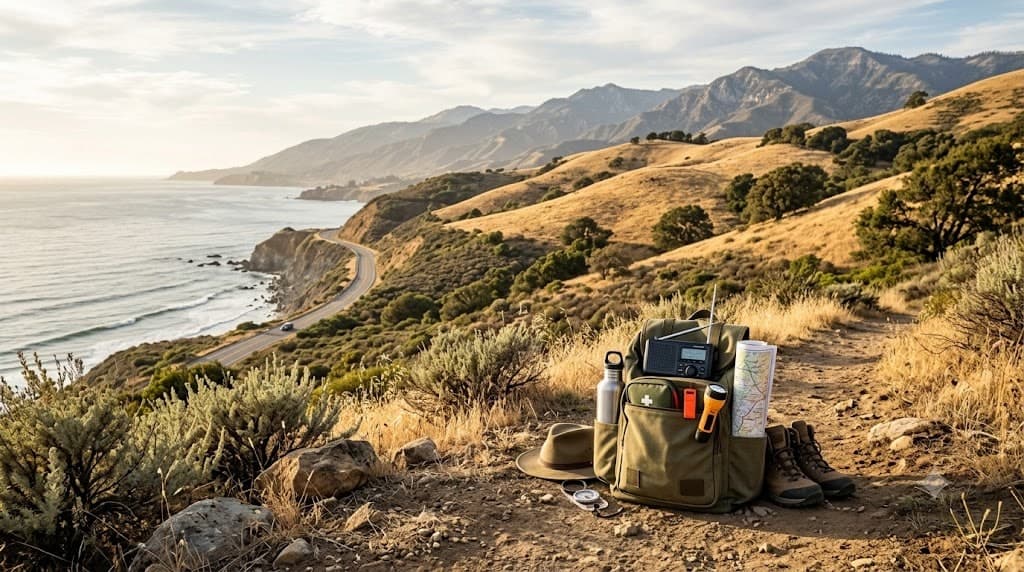
California’s size, geography, climate, coastline, mountains, forests, valleys, deserts, and dense urban areas create many different preparedness needs. Earthquake planning matters across much of the state. Wildfire and smoke planning are important for many inland, foothill, mountain, and wind-prone communities. Atmospheric rivers and winter storms can bring flooding, landslides, debris flows, and travel disruptions, especially near burn scars, steep slopes, rivers, and low-lying areas. Extreme heat and drought can affect daily routines, health, water use, and power reliability. Coastal communities also need to understand tsunami evacuation routes and local alerts. A household plan should start with local emergency alerts, evacuation routes, backup communications, supplies for outages, and a calm review of insurance, documents, pets, vehicles, and family contact needs.
California
California has many active faults, so households should plan for shaking, falling objects, broken utilities, damaged roads, and short-notice disruption.
Wildfire risk varies by region and season, but many communities benefit from defensible-space awareness, evacuation planning, smoke readiness, and alert sign-ups.
Heat waves and dry conditions can strain households, utilities, agriculture, outdoor work, and vulnerable neighbors, especially during long hot periods.
Heavy rain, atmospheric rivers, river flooding, urban drainage problems, snowmelt, and coastal storms can create flood risk in many parts of the state.
Steep terrain, saturated soils, burn scars, and intense rainfall can increase the chance of slope movement or fast-moving debris flows.
Outages can happen during heat, wind, storms, wildfires, grid strain, or planned Public Safety Power Shutoff events in fire-prone conditions.
California coastal communities should know local tsunami evacuation zones, natural warning signs, official alerts, and safe routes to higher ground.
State emergency management source for preparedness, response, recovery, earthquakes, floods, fires, power outages, and related planning.
Plain-language California preparedness information for alerts, earthquakes, wildfires, heat, floods, power outages, and household readiness.
Official wildfire preparedness resource with planning, defensible-space, evacuation, and household readiness information.
State public health information about extreme heat, heat safety, and community health considerations.
State flood preparedness and water resources information, including flood planning and atmospheric river context.
Federal scientific source for earthquake monitoring, earthquake hazards, and seismic science.
Educational state history profile for California from America250Atlas, a visual guide for the United States 250th anniversary.
Morgan Hale
Ask Morgan about disasters, preparedness, checklists, supplies, or practical next steps.