Flooding
The most common and costly hazard in Pennsylvania. Heavy rains, snowmelt, and ice jams cause severe riverine and flash flooding across all counties.
Northeast preparedness
Pennsylvania's diverse geography makes it vulnerable to a wide range of natural hazards, with flooding and winter storms leading as the most frequent threats. Preparedness requires an understanding of localized risks from the Great Lakes region to the Atlantic coastal impacts.
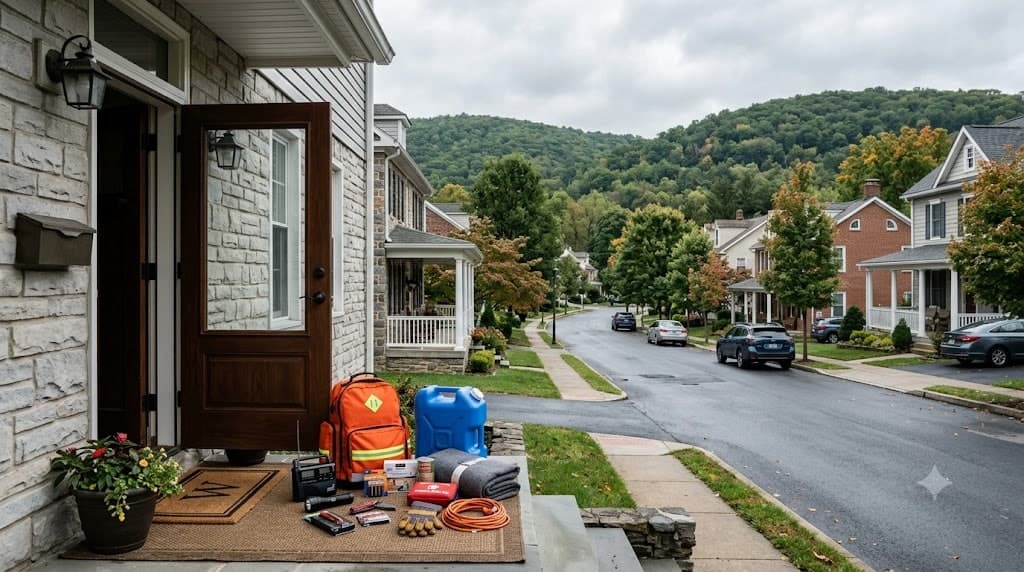
With topography that includes the Appalachian Mountains, large river valleys, and significant urban centers, Pennsylvania experiences complex weather patterns. Flooding is the state's most frequent and costly natural hazard, affecting both urban and rural areas through flash floods, riverine flooding, and ice jams. Additionally, winter brings heavy snow, ice storms, and dangerous snow squalls, especially in the western and central parts of the state. Severe thunderstorms, tornadoes, and the remnants of tropical systems from the Atlantic also pose significant annual risks. A resilient Pennsylvania household plans for severe weather disruptions, long-duration power outages, and sudden travel impacts.
Pennsylvania
The most common and costly hazard in Pennsylvania. Heavy rains, snowmelt, and ice jams cause severe riverine and flash flooding across all counties.
Heavy snowfall, ice storms, and sudden white-out snow squalls create dangerous travel conditions, power outages, and isolated communities.
Spring and summer months bring strong storms capable of producing damaging winds, large hail, and tornadoes, particularly in the central and eastern regions.
Hurricanes and tropical storms moving up the East Coast frequently dump massive amounts of rainfall inland, leading to catastrophic regional flooding.
Summer heat waves with high humidity levels pose significant health risks, especially to vulnerable populations in dense urban centers like Philadelphia and Pittsburgh.
High winds, ice accumulation, and severe weather often result in utility disruptions, requiring residents to be self-sufficient for several days.
The primary state agency coordinating disaster mitigation, preparedness, response, and recovery.
Pennsylvania's official emergency preparedness campaign for individuals, families, and communities.
Real-time traffic, weather-related road closures, and travel conditions managed by PennDOT.
Official guidance on public health emergencies, extreme heat safety, and community health.
Provides local weather forecasts, severe weather watches, and warnings.
Educational state history profile for Pennsylvania from America250Atlas, a visual guide for the United States 250th anniversary.
Morgan Hale
Ask Morgan about disasters, preparedness, checklists, supplies, or practical next steps.