Hurricanes and tropical storms
Texas Gulf Coast communities can face hurricane winds, storm surge, heavy rain, evacuation decisions, coastal flooding, and long power disruptions.
South preparedness
Texas households prepare for a wide range of hazards, including hurricanes, flash flooding, tornadoes, severe thunderstorms, extreme heat, winter storms, drought, wildfire risk, and power outages. Preparedness works best when families follow local alerts, know evacuation routes, and keep flexible plans for both fast-moving and long-duration disruptions.
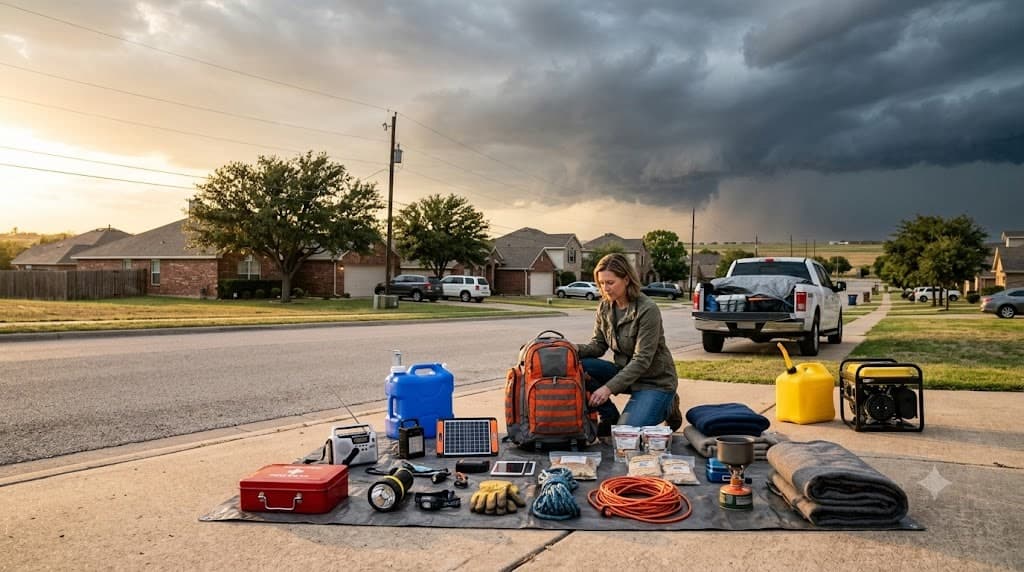
Texas has Gulf Coast communities exposed to hurricanes, storm surge, and tropical rainfall; large metro areas that can experience flash flooding and power disruption; plains and prairie regions with severe storms, tornadoes, hail, drought, and wildfire risk; and northern and central areas that can face winter storms and hard freezes. Extreme heat is a major seasonal concern across much of the state. Because Texas hazards vary by region, households should start with local emergency management guidance, sign up for alerts, review evacuation and shelter options, and prepare for outages, travel disruption, and communication gaps. A practical Texas plan should include supplies for staying home, a go-bag for leaving quickly, a family communication plan, pet planning, insurance and document organization, and careful attention to official instructions during hurricanes, floods, wildfires, winter weather, and severe storms.
Texas
Texas Gulf Coast communities can face hurricane winds, storm surge, heavy rain, evacuation decisions, coastal flooding, and long power disruptions.
Heavy rain, tropical systems, urban drainage limits, river flooding, and low-water crossings can create dangerous flooding in many parts of Texas.
Severe thunderstorms can bring tornadoes, large hail, damaging wind, lightning, and fast-changing conditions across large parts of the state.
Long periods of high heat can affect daily routines, outdoor work, transportation, pets, neighbors, and households without reliable cooling.
Freezing rain, ice, snow, hard freezes, and dangerous travel conditions can disrupt roads, utilities, water systems, and household routines.
Dry periods, wind, grasses, brush, and expanding development near wildland areas can increase wildfire risk in parts of Texas.
Outages may happen during hurricanes, heat waves, winter storms, severe storms, wildfire conditions, or other utility disruptions.
State emergency management source for preparedness, response coordination, disaster information, evacuation resources, and recovery links.
Texas-specific preparedness information for building a kit, making a plan, staying informed, checking roads, and reviewing evacuation routes.
Plain-language Texas preparedness information for hurricanes, floods, wildfires, extreme heat, tornadoes, and other hazards.
State public health guidance on reducing heat-related illness risk during hot weather.
State wildfire and forestry resource with information on wildfire prevention, preparedness, response, and community risk reduction.
Federal weather safety source for hurricanes, floods, tornadoes, lightning, heat, winter weather, and severe storms.
Educational state history profile for Texas from America250Atlas, a visual guide for the United States 250th anniversary.
Morgan Hale
Ask Morgan about disasters, preparedness, checklists, supplies, or practical next steps.