Disaster history
The Black Death
The Black Death was a major plague pandemic that moved through connected trade, travel, and urban networks. It is studied for public health, communication, social disruption, labor systems, grief, misinformation, and community resilience.
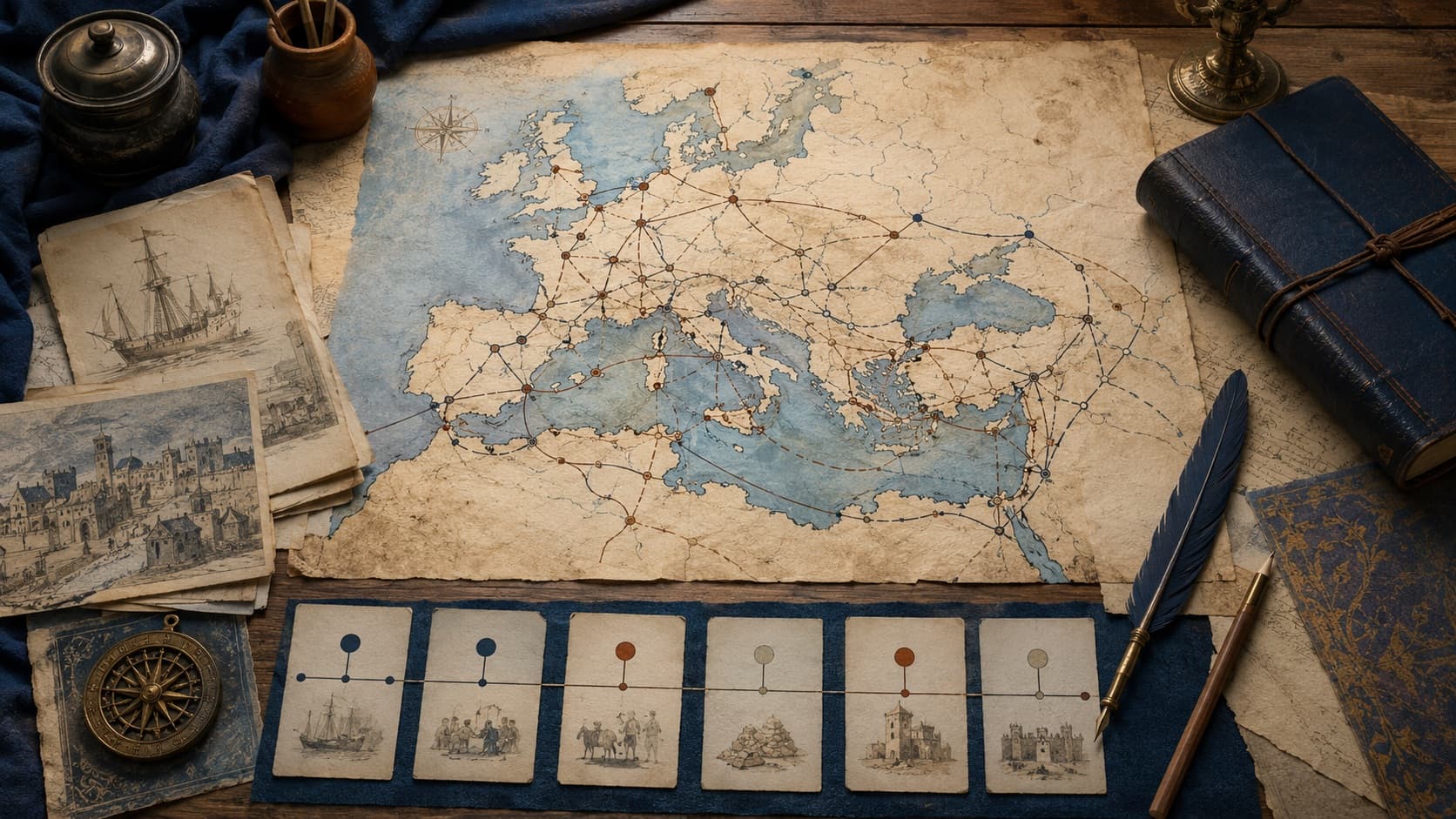
What happened
Overview
The Black Death was a devastating plague pandemic that reached Europe in the late 1340s and continued in waves through the 1350s and beyond. Modern research links plague to the bacterium Yersinia pestis, while historical scholarship shows how the disease moved through trade routes, ports, towns, households, and social networks. Mortality varied by place, but the demographic, economic, religious, and political effects were enormous. Medieval communities lacked modern germ theory, antibiotics, laboratory testing, public health systems, and reliable communication, which shaped both response and fear. The event is important for modern preparedness not because it offers simple comparisons, but because it shows how disease can stress trust, caregiving, labor, supply, records, burial practices, and social cohesion.
Timeline
Key moments
Plague circulated in parts of Eurasia before reaching Mediterranean trade networks and European ports.
Historical accounts describe plague arriving in Mediterranean port cities, including Sicily, and spreading along maritime and overland routes.
The disease spread widely through parts of Europe, affecting cities, rural areas, households, clergy, workers, and local authorities.
Outbreaks continued across additional regions, with major social, economic, religious, and political consequences.
Plague recurred in later waves, while communities adapted labor, public health, religious, and legal practices over time.
Why it mattered
- It became one of the most consequential pandemics in recorded history and reshaped populations, economies, and institutions.
- It showed how connected trade and travel networks can move disease across regions.
- It revealed how fear, uncertainty, misinformation, and blame can deepen harm during public health crises.
- It changed labor relationships, property arrangements, caregiving systems, and social expectations in many places.
- It remains a case study in public health history, social resilience, and the limits of knowledge during a crisis.
Systems that were stressed
- Household caregiving, local medicine, religious care, burial practices, and community support
- Ports, trade routes, markets, farms, food supply, labor availability, and taxation
- Local governance, public order, recordkeeping, communication, and trust
- Care for children, elders, workers, travelers, poor households, and socially targeted groups
- Long-term economic, legal, religious, and cultural systems after major population loss
Preparedness lessons
- For modern public health emergencies, rely on qualified public health sources rather than rumor or fear.
- Keep household essentials, medication information, contacts, and caregiving plans organized for disruptions.
- Plan how your household would communicate if schools, work, travel, or services changed quickly.
- Support neighbors and avoid blaming groups of people for disease, because stigma makes response harder.
- Prepare calmly by writing down trusted health information sources before a stressful situation begins.
Community lessons
- Public health communication should be clear, consistent, evidence-based, and honest about uncertainty.
- Communities need plans for caregiving, food access, worker protection, records, death care, and continuity of essential services.
- Misinformation and scapegoating can become hazards in themselves and should be addressed directly.
- Response planning should include people with limited money, crowded housing, disabilities, caregiving duties, or reduced access to care.
- Historical pandemic study should be handled with care, recognizing grief, unequal impacts, and the difference between medieval and modern medicine.
Sources