Disaster history
The Mount St. Helens Eruption of 1980
The 1980 eruption of Mount St. Helens reshaped volcano monitoring, hazard mapping, public warning, and understanding of volcanic ash impacts. It remains a key event in modern U.S. volcanology.
What happened
Overview
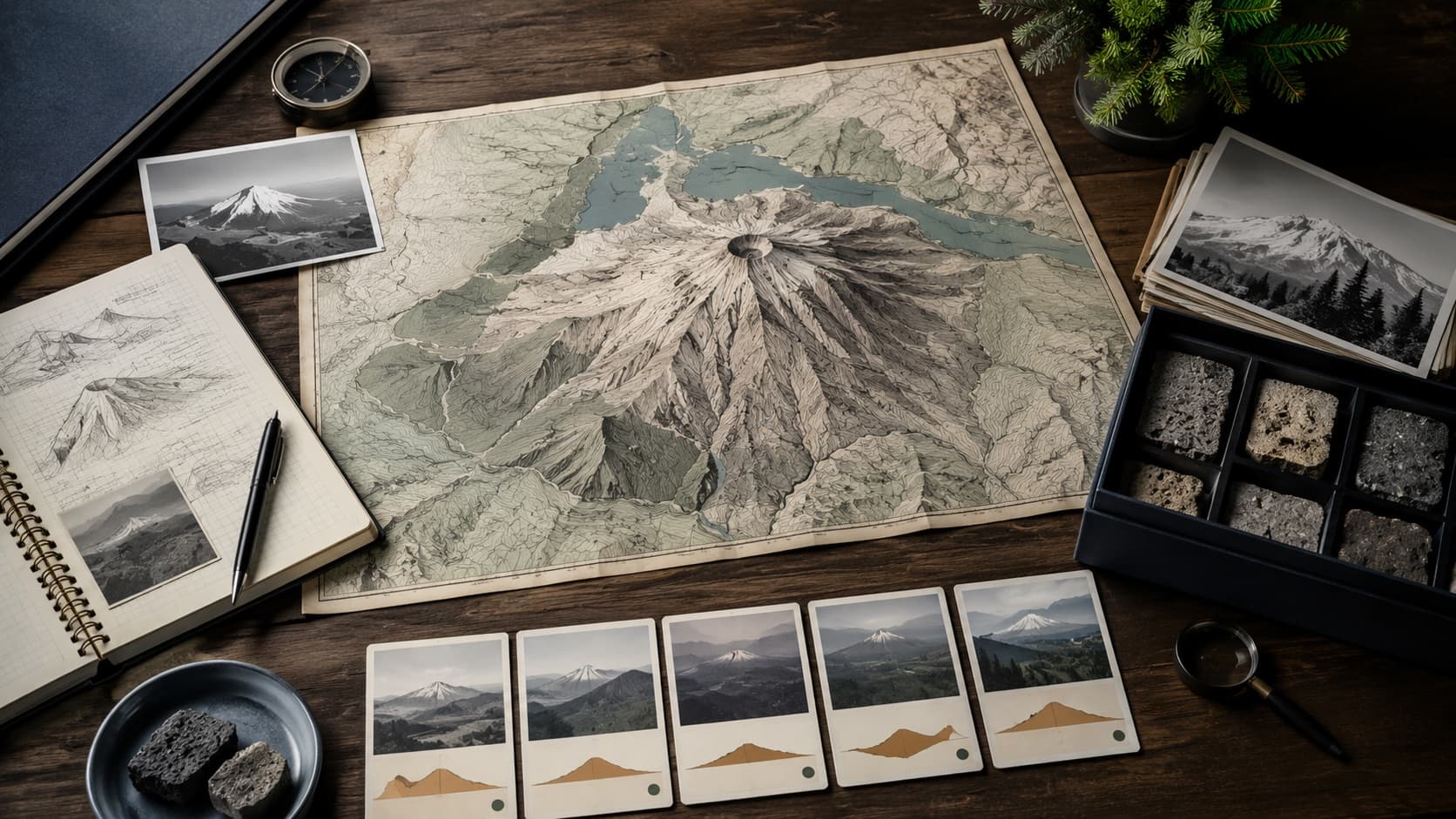
Mount St. Helens showed signs of unrest for weeks before its major eruption on May 18, 1980. Earthquakes, steam-driven activity, and visible changes to the volcano led scientists and officials to establish restricted zones and increase monitoring. The eruption produced a large landslide, a lateral blast, ashfall, and mudflows that affected transportation, rivers, forests, utilities, agriculture, and communities across a wide region. This history is often studied for what it taught scientists about volcano behavior and for what it taught officials about public warnings around hazards that can change quickly. Ashfall also showed that volcanic events can disrupt areas far from the volcano itself by affecting roads, airports, vehicles, water systems, and cleanup operations. The eruption strengthened public understanding that volcano preparedness is not only for people living on the mountain, but also for communities downwind, downstream, and along transportation corridors.
Timeline
Key moments
Earthquake swarms and small eruptions signaled renewed activity at Mount St. Helens after a long quiet period.
Scientists monitored the growing bulge on the volcano's north side while officials adjusted access restrictions and public warnings.
A major eruption began after a strong earthquake and landslide changed conditions on the volcano.
Ash spread downwind across eastern Washington and beyond, disrupting travel, visibility, cleanup, and some public services.
The event led to expanded volcano research, monitoring, hazard mapping, and public education in the Cascade Range and beyond.
Why it mattered
- It was the first large explosive eruption in the United States studied with many tools of modern volcanology.
- It improved understanding of landslides, lateral blasts, ashfall, mudflows, and changing volcanic hazards.
- It showed why exclusion zones and public warnings may need to change as scientists learn more.
- It revealed how ash can disrupt transportation, machinery, water systems, farms, and daily routines far from the volcano.
- It supported the growth of long-term volcano monitoring and public hazard education.
Systems that were stressed
- Volcano monitoring, hazard mapping, restricted zones, and public warning systems
- Roads, airports, rail, vehicle operation, and visibility during ashfall
- Rivers, bridges, drainage, sediment management, and downstream communities
- Power, water treatment, communications, cleanup, and public works
- Scientific field operations, interagency coordination, and public information
Preparedness lessons
- If you live near a volcano, know official hazard maps and follow local official instructions about closures or evacuations.
- If ashfall is possible, keep basic supplies that help you stay indoors safely until public health or emergency officials provide guidance.
- Protect copies of important documents and contact information in case access routes are closed for an extended period.
- Plan for transportation disruption, including school, work, medical appointments, and caregiving needs.
- Prepare calmly by choosing one practical step, such as learning whether your community is downwind or downstream from a volcanic hazard area.
Community lessons
- Volcano communication should explain uncertainty clearly because conditions can change as new observations arrive.
- Access restrictions work best when the public understands their purpose and limits.
- Ash cleanup plans need coordination among transportation agencies, utilities, schools, businesses, and public health officials.
- Scientific monitoring investments can improve warning time, but they do not remove the need for household and community planning.
- Recovery should include ecological, economic, transportation, and mental well-being considerations over many years.
Sources