Disaster history
Noah's Flood in Genesis
Noah's flood is a story from the Bible, not a modern documented disaster record. It remains culturally important because it connects flood, warning, household action, care for living things, covenant, memory, and moral reflection.
What happened
Overview
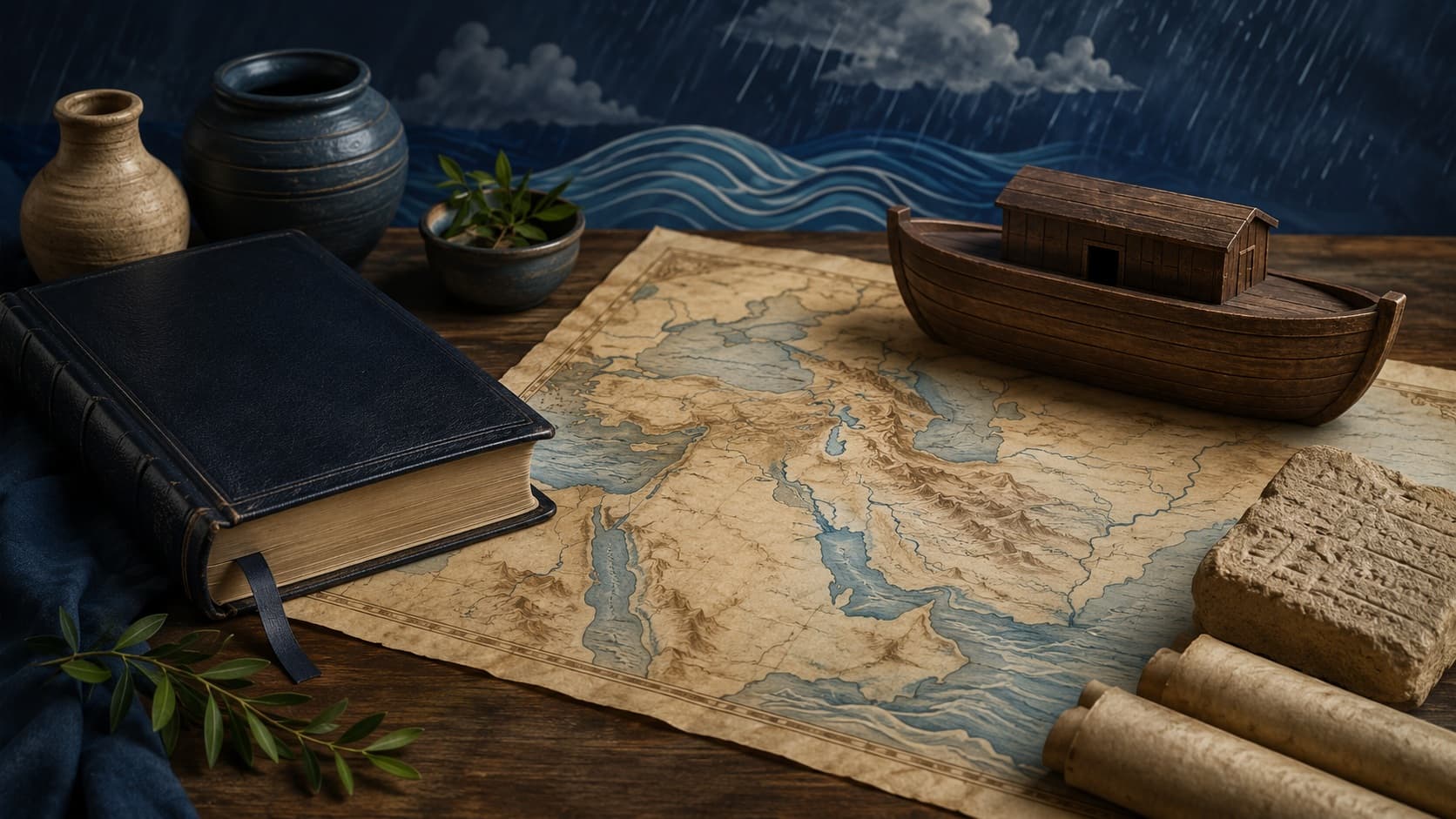
The story of Noah's flood appears in Genesis 6-9. In the biblical narrative, Noah is warned of a coming flood, builds an ark, gathers his household and living creatures, survives the waters, and later receives a covenant sign after the flood recedes. This history entry treats the account as a biblical story and a major cultural text, not as a modern emergency-management case file or a verified global disaster chronology. Its value for a preparedness site is different from the value of documented events such as hurricanes, fires, earthquakes, or pandemics. The story has shaped religious imagination, art, ethics, children's teaching, flood memory, and discussions about human responsibility for generations. Read carefully, it also raises themes that still matter in household preparedness: listening to warnings, acting before conditions deteriorate, protecting dependents, preserving essentials, caring for animals, waiting through uncertainty, and rebuilding with humility after disruption.
Timeline
Key moments
The biblical story introduces Noah, describes divine warning, and frames the coming flood as part of a moral and theological narrative.
Noah is instructed to build an ark and prepare space for his household, living creatures, and provisions.
The narrative describes waters rising, the ark floating, and Noah's household and the animals remaining protected inside.
The waters recede in stages, birds are sent out, and the story emphasizes patience before leaving the ark.
The story closes with covenant language and later becomes one of the Bible's best-known flood narratives in religious teaching, art, and cultural memory.
Why it mattered
- It became one of the most widely recognized flood stories in biblical tradition and in later Jewish, Christian, and Islamic cultural memory.
- It connects disaster imagery with moral reflection, responsibility, preservation, renewal, and covenant rather than only physical survival.
- It shaped centuries of art, storytelling, religious education, literature, and public imagination about floods.
- It offers a narrative pattern of warning, preparation, waiting, and reentry that many readers still find memorable.
- It shows how ancient stories can influence how communities think about risk, care for dependents, and meaning after disruption.
Systems that were stressed
- Household preparation, stored provisions, enclosed shelter, patience, and trust in warning
- Care for family members, animals, and the continuity of living things in the story
- Water as a force of isolation, loss, uncertainty, and eventual renewal
- Post-flood return, reorientation, gratitude, covenant, and rebuilding of ordinary life
- Religious interpretation, cultural memory, children's teaching, art, literature, and ethical reflection
Preparedness lessons
- Treat this as a biblical story rather than an operational flood guide, then look for practical themes with humility.
- Act before a flood threat becomes urgent by knowing official alerts, evacuation routes, and household responsibilities.
- Plan for people, pets, medication needs, documents, food, water, communication, and time away from normal routines.
- Wait for official guidance before returning after floodwater, because receding water does not always mean safe conditions.
- Use memorable stories as prompts for calm preparation, but rely on local emergency managers, weather services, and floodplain guidance for real events.
Community lessons
- Stories can help communities remember that preparation often begins before danger is visible.
- Flood education should connect household action with care for children, elders, animals, neighbors, and people who need help moving.
- Recovery is not only leaving danger; it also includes waiting, checking conditions, cleaning safely, replacing records, and rebuilding trust.
- Religious and cultural narratives should be handled respectfully because people may read them devotionally, historically, symbolically, or literarily.
- Preparedness education works best when it distinguishes moral or spiritual meaning from official hazard guidance and evidence-based safety steps.
Sources